Instructions
- If desired, pat the beef chunks dry with paper towels. In a large skillet, heat the olive oil over medium-high heat. Brown the beef on all sides until a nice crust forms, about 2-3 minutes per side. This step is optional but adds a deeper flavor to the roast. Remove beef from skillet and place in the bottom of your slow cooker.
- If you skipped browning the beef, simply place the raw beef chunks evenly in the bottom of your slow cooker.
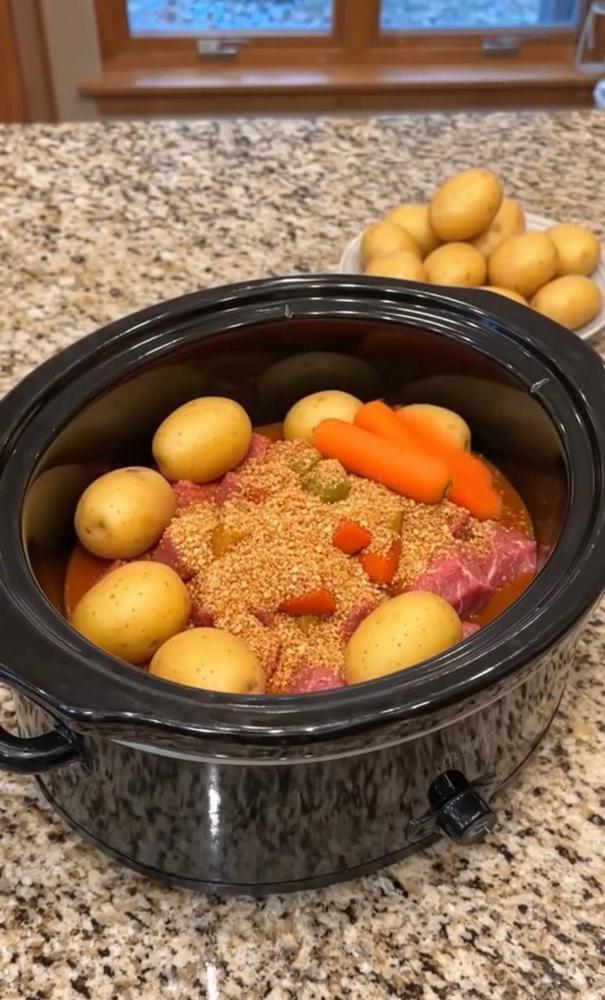
- Sprinkle the dry onion soup mix (or gravy mix/homemade seasoning blend), dried thyme, and black pepper evenly over the beef.
- Scatter the chopped onion and celery (if using) over the beef and seasonings.
- Arrange the potatoes and carrots over the beef and other vegetables. Try to keep them in a relatively even layer.
- In a small bowl or measuring cup, whisk together the beef broth and Worcestershire sauce. Pour this liquid evenly over all the ingredients in the slow cooker.
- Cover the slow cooker with its lid.
- Cook on LOW for 6-8 hours or on HIGH for 3-4 hours, or until the beef is fork-tender and the vegetables are soft. The cooking time may vary slightly depending on your slow cooker and the size of your beef chunks.
- Once cooked, carefully remove the beef and vegetables to a serving platter.
- To make an optional gravy from the cooking liquid: Skim off any excess fat from the liquid remaining in the slow cooker. In a small bowl, whisk together the cornstarch and cold water to form a slurry. Turn the slow cooker to HIGH (if it has a “simmer” or “warm” setting, use that, or transfer liquid to a saucepan on the stove). Gradually whisk the cornstarch slurry into the hot cooking liquid in the slow cooker. Stir continuously until the gravy thickens to your desired consistency, about 5-10 minutes.
- Shred the beef with two forks directly on the serving platter, or serve the chunks whole. Spoon some of the gravy over the beef and vegetables.
- Garnish with fresh chopped parsley, if desired, and serve hot.
Cooking Tips and Variations
For an exceptionally flavorful roast, don’t skip browning the beef. While optional for convenience, searing the meat before adding it to the slow cooker creates a rich, caramelized crust that locks in juices and develops a deeper, more complex flavor profile. Pat the beef dry first to ensure a good sear. When selecting your beef, a chuck roast is ideal because its higher fat content and connective tissue break down beautifully during slow cooking, resulting in that desirable fall-apart tenderness. If you can’t find chuck, a bottom round or rump roast can also work, though they may be slightly leaner.
The size of your vegetables matters for even cooking. If you’re using larger potatoes or carrots, make sure to cut them into uniform, roughly 1.5 to 2-inch chunks. This ensures they all become tender at the same rate. Smaller new potatoes or baby carrots can be left whole, as seen in the image, making prep even quicker. Feel free to customize your vegetable medley! Onions and celery are fantastic additions, contributing aromatic depth. For extra nutrition and flavor, consider adding mushrooms, parsnips, or even bell peppers during the last hour of cooking to prevent them from becoming too mushy.
When it comes to seasoning, a dry onion soup mix is a classic shortcut for a reason – it’s packed with flavor. However, you can easily create your own blend. A mix of garlic powder, onion powder, paprika, dried rosemary, and a touch of salt and pepper works wonderfully. You can also experiment with different dried herbs like bay leaves or marjoram. Remember that slow cookers retain a lot of moisture, so you generally need less liquid than in traditional stovetop or oven recipes. The beef and vegetables will release their own juices, contributing to the delicious broth. Avoid overcrowding your slow cooker; it should be filled no more than two-thirds to three-quarters full to allow for proper heat circulation and even cooking.
After the roast is done, resist the urge to immediately shred or slice it. Allowing the cooked beef to rest for 10-15 minutes on the serving platter allows the juices to redistribute throughout the meat, ensuring every bite is incredibly juicy and tender. This resting period is just as important for slow-cooked meats as it is for roasted ones. If you plan to make gravy, remember to skim off any excess fat from the cooking liquid first for a cleaner, richer sauce. A simple cornstarch slurry is all you need to thicken it into a luscious gravy that perfectly complements the roast. For an extra pop of freshness and color, a sprinkle of fresh chopped parsley or chives right before serving is a lovely touch.
Storage and Reheating
To store any leftover Slow Cooker Beef Roast with Potatoes and Carrots, allow the dish to cool completely to room temperature within two hours of cooking. Transfer the beef, vegetables, and any remaining gravy or cooking liquid into airtight containers. Store these containers in the refrigerator for up to 3-4 days. For longer storage, this dish freezes beautifully. Place the cooled leftovers in freezer-safe airtight containers or heavy-duty freezer bags. If using bags, press out as much air as possible before sealing. Frozen, the roast will maintain its quality for up to 2-3 months.
When reheating from the refrigerator, the best method to retain moisture and flavor is to gently warm the roast. You can reheat individual portions in the microwave on medium power, stirring occasionally, until heated through. Alternatively, transfer the desired amount to an oven-safe dish, add a splash of beef broth or water to prevent drying, cover tightly with foil, and reheat in a preheated oven at 300°F (150°C) for 20-30 minutes, or until warmed thoroughly. From frozen, it’s best to thaw the roast overnight in the refrigerator before reheating. If reheating directly from frozen, this can be done in the oven (covered, at 300°F/150°C for 45-60 minutes or until hot) or carefully in the microwave with additional time and stirring, ensuring it reaches an internal temperature of 165°F (74°C).
Frequently Asked Questions
Can I use frozen beef in the slow cooker?
It is generally not recommended to put frozen beef directly into a slow cooker without thawing first. The slow cooker takes too long to bring the frozen meat up to a safe temperature, allowing it to remain in the “danger zone” (between 40°F and 140°F or 4°C and 60°C) where harmful bacteria can multiply rapidly. Always thaw your beef completely in the refrigerator before adding it to the slow cooker for food safety.
Do I need to add water if I’m using a lot of vegetables?
Slow cookers are very efficient at retaining moisture, and both the beef and vegetables will release a significant amount of liquid as they cook. While the recipe calls for 1.5 cups of beef broth, you typically won’t need to add extra water, even with a generous amount of vegetables. If you notice the liquid level getting too low (which is rare in a slow cooker), you can add a small splash of additional broth, but generally, resist the urge to add more liquid than specified.
My potatoes are still hard, but the beef is done. What went wrong?
This usually happens if the potatoes were cut too large or were placed on top where they didn’t get enough direct contact with the hot liquid. Ensure potatoes are cut into uniform, smaller pieces (around 1.5-2 inches) and are nestled in with the beef and liquid, rather than piled high on top. If this occurs, you can remove the beef and continue cooking the vegetables for another 30-60 minutes on high, or transfer the vegetables to a pot on the stove to finish cooking.
Can I make this recipe dairy-free or gluten-free?
Yes, this recipe is naturally dairy-free. To ensure it’s gluten-free, you will need to check the labels of your dry onion soup mix or gravy mix, as some brands may contain wheat products. The safest option is to use a homemade seasoning blend with gluten-free spices. If making gravy, ensure your cornstarch is pure and not mixed with any gluten-containing ingredients, which is usually the case. Beef broth is typically gluten-free, but always double-check the label if you have severe sensitivities.