Instructions
- Pat the beef cubes dry with paper towels. Season generously with salt and black pepper.
- Heat olive oil in a large skillet or Dutch oven over medium-high heat. Working in batches if necessary, sear the beef on all sides until deeply browned. This step is crucial for developing rich flavor. Transfer the seared beef to the slow cooker insert.
- Add the chopped onion to the same skillet (add a little more oil if needed) and cook for 3-5 minutes until softened and lightly browned. Add the minced garlic and cook for another minute until fragrant.
- Deglaze the skillet with red wine (if using), scraping up any browned bits from the bottom of the pan. Let it simmer for 1-2 minutes until slightly reduced.
- Pour the onion, garlic, and wine mixture over the seared beef in the slow cooker.
- Add the carrots, potatoes, beef broth, Worcestershire sauce, tomato paste, dried thyme, and bay leaf to the slow cooker. Stir gently to combine all ingredients.
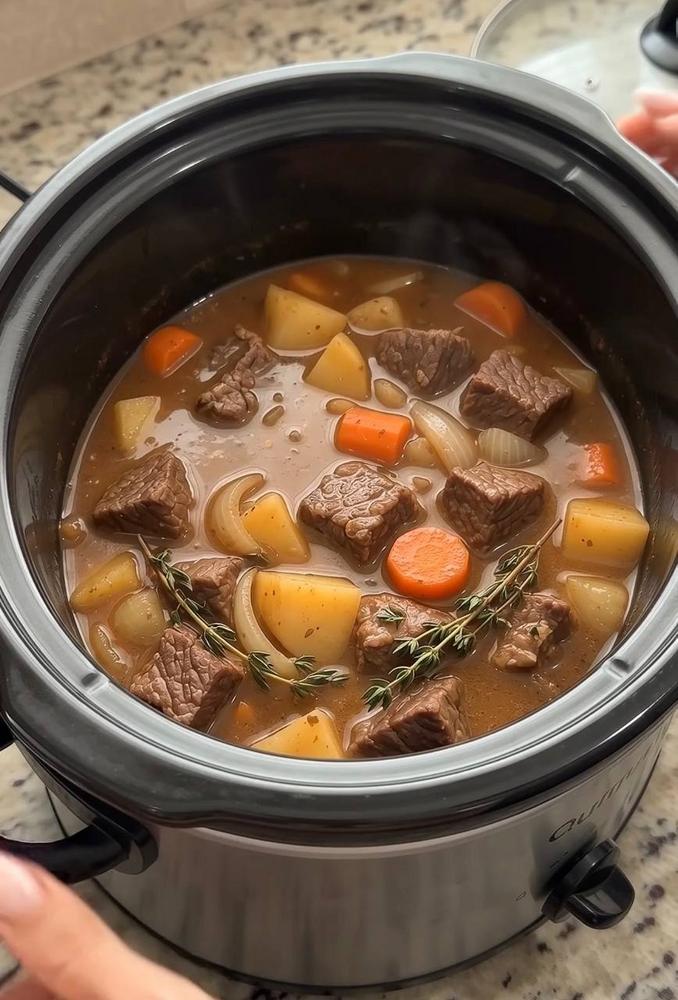
- Cover the slow cooker and cook on LOW for 7-8 hours or on HIGH for 3.5-4 hours, or until the beef is fork-tender and the vegetables are soft.
- About 30 minutes before serving, in a small bowl, whisk together the all-purpose flour and cold water to create a smooth slurry.
- Stir the flour slurry into the stew in the slow cooker. Cook for an additional 20-30 minutes on HIGH or until the stew has thickened to your desired consistency.
- Remove and discard the bay leaf. Taste and adjust seasoning with additional salt and pepper if needed.
- Ladle the hot stew into bowls and garnish with fresh chopped parsley or thyme before serving.
Cooking Tips and Variations
To achieve the absolute best slow cooker beef stew, don’t skip the crucial step of searing the beef. Browning the meat before it goes into the slow cooker creates a rich, caramelized crust that locks in juices and develops deep, complex flavors through the Maillard reaction. This extra 10-15 minutes of effort makes a world of difference in the final taste of your stew.
When preparing your vegetables, ensure they are cut into similarly sized chunks. For instance, if your potatoes are large cubes, cut your carrots into thick rounds or substantial pieces. This consistency in size is important for even cooking, preventing some vegetables from becoming mushy while others are still undercooked. Especially for potatoes and carrots, aim for pieces around 1 to 1.5 inches.
Resist the urge to peek! Every time you lift the lid of your slow cooker, a significant amount of heat escapes, and it can take 20-30 minutes for the internal temperature to recover. This prolongs the cooking time and can affect the tenderness of your beef and vegetables. Trust the process and let your slow cooker do its magic undisturbed.
For an even richer flavor profile, consider adding a splash of dry red wine (like Cabernet Sauvignon or Merlot) when deglazing the pan after searing the beef. The acidity and fruit notes in the wine add another layer of depth to the broth. If you prefer not to use wine, an equal amount of extra beef broth or even a dark beer can be substituted.
If you find your stew isn’t as thick as you’d like at the end of cooking, the flour slurry method described in the instructions is a reliable way to thicken it. Alternatively, you can use a cornstarch slurry (1 tablespoon cornstarch mixed with 2 tablespoons cold water) for a gluten-free option. For a naturally thicker stew, try mashing a few cooked potato pieces against the side of the slow cooker to release their starches into the broth.
Fresh herbs, like thyme and parsley, are fantastic for adding a burst of freshness and aroma. While dried herbs are great for long cooking, a sprinkle of fresh herbs at the very end, or even a few sprigs added during the last hour of cooking, can elevate the entire dish. Rosemary is another excellent choice that pairs beautifully with beef.
Don’t overfill your slow cooker. For optimal cooking and to prevent spills, your slow cooker should generally be filled between half and two-thirds full. Overfilling can lead to uneven cooking and may cause the contents to boil over.
Feel free to experiment with other root vegetables. Turnips, parsnips, or even sweet potatoes can be delicious additions. For a touch of green, stir in a handful of frozen peas or green beans during the last 30 minutes of cooking.
Storage and Reheating
Slow cooker beef stew is an excellent meal prep option, as it often tastes even better the next day when the flavors have had more time to meld. To store, allow the stew to cool completely to room temperature (within 2 hours of cooking). Transfer the stew to airtight containers. It can be stored in the refrigerator for up to 3-4 days.
For longer storage, beef stew freezes beautifully. Portion the cooled stew into freezer-safe containers or heavy-duty freezer bags, leaving some headspace for expansion. It can be frozen for up to 3 months. Thaw frozen stew overnight in the refrigerator before reheating.
To reheat individual portions, you can use a microwave. Place the stew in a microwave-safe bowl, cover loosely, and heat on high for 2-4 minutes, stirring halfway through, until heated through. For larger quantities, transfer the stew to a pot on the stovetop over medium-low heat. Stir occasionally and heat gently until simmering and thoroughly warmed. If the stew has thickened too much during storage, you can add a splash of beef broth or water to reach your desired consistency.
Frequently Asked Questions
What kind of beef is best for slow cooker stew?
The best cuts of beef for slow cooker stew are those that benefit from long, slow cooking to become tender. Beef chuck roast, often labeled as “stew meat” when pre-cut, is ideal. Other good options include beef round (bottom or top round) or short ribs. These cuts have connective tissue that breaks down during slow cooking, resulting in incredibly tender, flavorful beef.
Can I make this stew without searing the beef?
While you can skip searing the beef, it is highly recommended not to. Searing the beef before adding it to the slow cooker creates a deep, caramelized crust that adds significant flavor and color to the stew. This browning process, known as the Maillard reaction, enhances the overall richness and complexity of the dish, making a noticeable difference in the final taste.
How can I make this stew gluten-free?
To make this slow cooker beef stew gluten-free, ensure your beef broth is gluten-free. For thickening, instead of using all-purpose flour, create a cornstarch slurry by whisking 1 tablespoon of cornstarch with 2 tablespoons of cold water. Stir this slurry into the stew during the last 30 minutes of cooking, just as you would with the flour slurry, and cook until thickened.