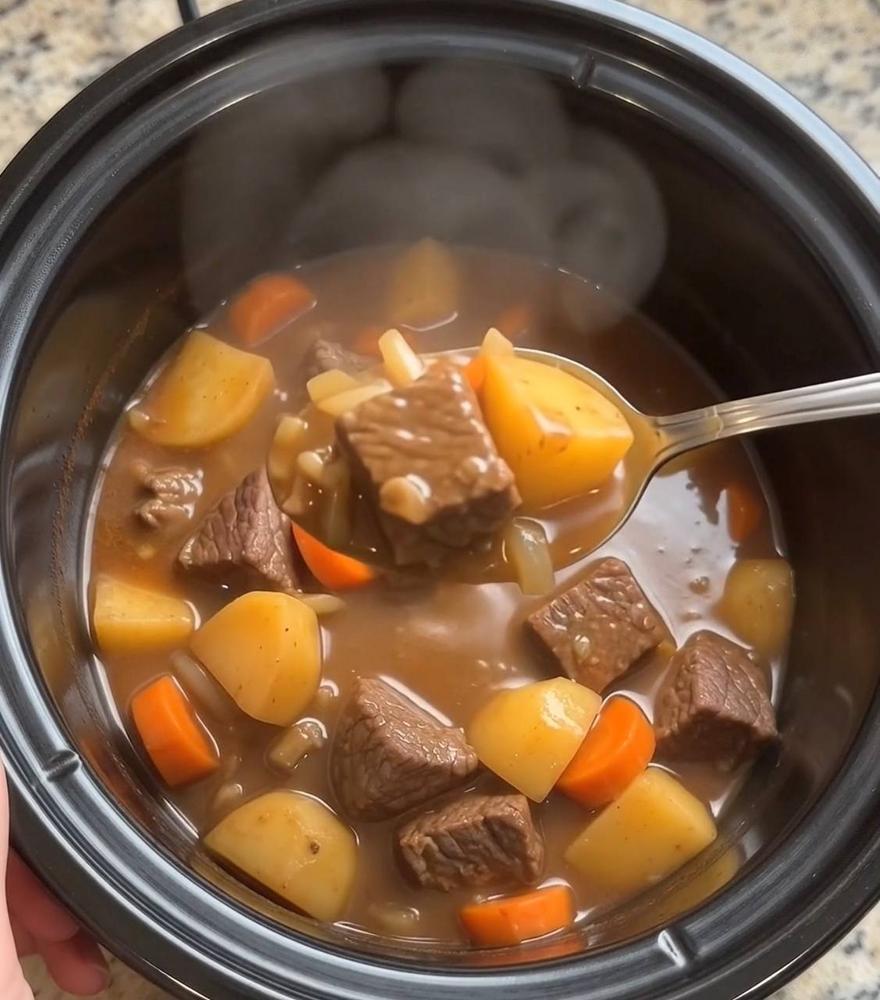
Instructions
- Pat the beef cubes dry with paper towels. Season generously with 1 teaspoon salt and 1/2 teaspoon black pepper.
- Heat olive oil in a large skillet or Dutch oven over medium-high heat. Working in batches if necessary, sear the beef cubes on all sides until deeply browned. This step is crucial for developing rich flavor. Remove browned beef to a plate.
- Add the chopped onion to the same skillet, adding a little more oil if needed. Sauté for 5-7 minutes until softened and lightly browned. Add the minced garlic and tomato paste, cooking for another minute until fragrant.
- Deglaze the pan with red wine (if using), scraping up any browned bits from the bottom of the skillet. Let it simmer for 2-3 minutes until slightly reduced.
- Transfer the seared beef, sautéed onion and garlic mixture, potatoes, and carrots to your slow cooker.
- Pour in the beef broth and Worcestershire sauce. Add the dried thyme, dried rosemary, and bay leaves. Stir gently to combine. Ensure the liquid mostly covers the ingredients; add a little more broth if needed.
- Cover the slow cooker and cook on low for 6-8 hours, or on high for 3-4 hours, until the beef is fork-tender and the vegetables are soft. Avoid lifting the lid during cooking, as this releases heat and extends cooking time.
- Once cooked, remove and discard the bay leaves. If you desire a thicker gravy, whisk together 2 tablespoons of cornstarch with 2 tablespoons of cold water in a small bowl to create a slurry. Stir the slurry into the hot stew. Cover and cook on high for another 15-20 minutes, or until the stew has thickened to your desired consistency.
- Stir in the optional frozen peas during the last 10 minutes of cooking if using. Taste and adjust seasoning with additional salt and pepper if necessary.
- Ladle the hot stew into bowls. Garnish with fresh chopped parsley before serving.
Cooking Tips and Variations
For the absolute best beef stew, don’t skip browning the beef. While it adds a small extra step, searing the beef cubes before they go into the slow cooker creates a rich, complex flavor profile through the Maillard reaction that simply cannot be achieved by just adding raw beef. This browning also helps seal in juices, contributing to more tender meat. When selecting your cut of beef, chuck roast is highly recommended due to its excellent marbling and connective tissue, which breaks down beautifully during slow cooking, resulting in incredibly tender, flavorful meat. Other good options include beef stew meat (often pre-cut chuck) or even short ribs for an extra luxurious texture. Ensure your vegetables, especially potatoes and carrots, are cut into large, uniform chunks, about 1 to 1.5 inches. This prevents them from becoming mushy during the long cooking time and ensures they cook evenly alongside the beef. Smaller pieces will disintegrate, leaving you with a less appealing texture.
To deepen the flavor of your stew, consider adding a splash of good quality red wine during the deglazing step. A dry red wine like Cabernet Sauvignon or Merlot works wonderfully, adding acidity and complexity that complements the rich beef flavors. If you prefer not to use alcohol, simply substitute with an equal amount of beef broth. Don’t be afraid to experiment with herbs and spices. While thyme and rosemary are classics, a pinch of smoked paprika can add a subtle smoky depth, and a dash of cayenne pepper can introduce a gentle warmth without making it overtly spicy. For a touch of sweetness and acidity, a tablespoon of balsamic vinegar added at the end of cooking can brighten the flavors. Always taste and adjust seasoning before serving; sometimes a little more salt or pepper can make a big difference.
For variations, you can easily customize this stew to your liking. Add other root vegetables like parsnips or rutabaga for a different earthy flavor profile. Mushrooms, particularly cremini or button mushrooms, can be added during the last hour of cooking for an umami boost. If you enjoy a thicker, heartier stew, consider adding a can of drained diced tomatoes along with the broth for extra body and flavor. For a creamy finish, a splash of heavy cream or a dollop of sour cream stirred in just before serving can add a luxurious touch. You can also make this stew even more filling by adding dumplings during the last 30-60 minutes of cooking (depending on the dumpling recipe); simply drop spoonfuls of dumpling dough directly into the hot stew and cover to cook. Another comforting addition could be a handful of pearl barley or farro, added with the vegetables, to absorb the rich broth and add a chewy texture.
Storage and Reheating
This Slow Cooker Beef Stew is fantastic for meal prepping and often tastes even better the next day as the flavors have more time to meld. To store, allow the stew to cool completely at room temperature (no longer than 2 hours) before transferring it to airtight containers. You can store individual portions or a larger batch. Refrigerate promptly, and the stew will keep well for up to 3-4 days. For longer storage, beef stew freezes beautifully. Transfer the cooled stew to freezer-safe airtight containers or heavy-duty freezer bags, leaving about an inch of headspace if using containers to allow for expansion. Label with the date. Frozen stew can be stored for up to 3 months. Thaw frozen stew overnight in the refrigerator before reheating.
When reheating, there are several convenient options. For individual servings, the microwave is your quickest bet. Transfer the stew to a microwave-safe bowl, cover loosely, and heat on high in 1-2 minute intervals, stirring in between, until heated through. For larger quantities, or if you prefer stovetop reheating, transfer the stew to a pot or Dutch oven over medium-low heat. Stir occasionally, bringing it to a gentle simmer, and continue to cook until thoroughly heated. If the stew has thickened too much in storage, you can add a splash of beef broth or water to reach your desired consistency. Ensure the stew reaches an internal temperature of 165°F (74°C) to be safely reheated. Avoid reheating the same portion multiple times; only reheat what you plan to consume.
Frequently Asked Questions
Can I make this stew ahead of time?
Absolutely! Beef stew is one of those magical dishes that often tastes even better the day after it’s made. The flavors have more time to meld and deepen. Prepare it a day or two in advance, store it in the refrigerator, and then gently reheat it on the stovetop or in the slow cooker before serving.
What if my stew isn’t thick enough?
If your stew is too thin at the end of the cooking time, you have a few options. The easiest method is to create a cornstarch slurry: whisk together 2 tablespoons of cornstarch with 2 tablespoons of cold water until smooth. Stir this mixture into the hot stew, cover, and cook on high for another 15-20 minutes, or until it reaches your desired thickness. Alternatively, you can remove some of the liquid, simmer it in a separate saucepan to reduce it, and then return it to the stew.
What cut of beef is best for slow cooker stew?
The best cut of beef for slow cooker stew is typically chuck roast. It has good marbling and connective tissue that breaks down beautifully during long, slow cooking, resulting in incredibly tender, flavorful meat. Other good options include beef stew meat (which is often pre-cut chuck) or even beef short ribs for a richer flavor and texture.
Can I add other vegetables to this stew?
Yes, this recipe is very adaptable! Feel free to add other root vegetables like parsnips or rutabaga. Mushrooms, celery, or even green beans can be added. If adding softer vegetables like green beans or peas, add them during the last 30-60 minutes of cooking to prevent them from becoming too mushy.