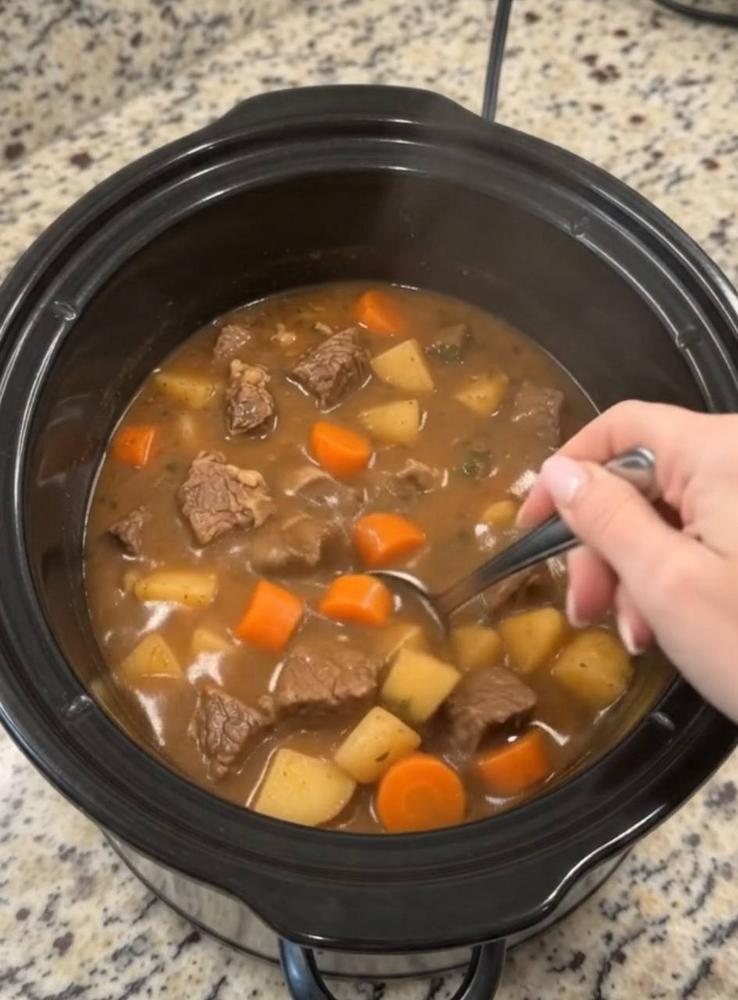
Instructions
- Pat the beef cubes dry with paper towels. Season generously with 0.5 teaspoon salt and 0.25 teaspoon black pepper.
- Heat 1 tablespoon of olive oil in a large skillet or Dutch oven over medium-high heat. Working in batches to avoid overcrowding, sear the beef cubes on all sides until deeply browned. This step is crucial for developing rich flavor. Remove seared beef to a plate and set aside.
- Add the remaining 1 tablespoon of olive oil to the skillet. Add the chopped onion and cook, stirring occasionally, until softened and translucent, about 5-7 minutes.
- Add the minced garlic to the skillet and cook for another minute until fragrant, being careful not to burn it.
- Deglaze the pan by pouring in the red wine (if using). Scrape up any browned bits from the bottom of the pan with a wooden spoon. Let it simmer for 2-3 minutes until slightly reduced. If not using wine, skip this step and proceed to the next.
- Transfer the seared beef, cooked onion, and garlic to your slow cooker.
- Pour in the beef broth, diced tomatoes (undrained), tomato paste, and Worcestershire sauce. Stir to combine.
- Add the dried thyme, dried rosemary, bay leaves, remaining 0.5 teaspoon salt, and 0.25 teaspoon black pepper. Stir everything together well.
- Add the chopped potatoes and carrots to the slow cooker, gently pushing them down into the liquid so they are mostly submerged.
- Cover the slow cooker and cook on LOW for 7-8 hours or on HIGH for 3-4 hours, or until the beef is incredibly tender and the vegetables are soft.
- About 30 minutes before serving, prepare a cornstarch slurry: In a small bowl, whisk together the 2 tablespoons of cornstarch and 2 tablespoons of cold water until smooth.
- Stir the cornstarch slurry into the stew in the slow cooker. If using, add the frozen peas at this time as well.
- Continue to cook on HIGH for another 20-30 minutes, or until the stew has thickened to your desired consistency.
- Remove the bay leaves before serving. Taste and adjust seasoning if necessary, adding more salt or pepper as needed.
- Ladle the hot stew into bowls and garnish with fresh chopped parsley, if desired.
Cooking Tips and Variations
For the most tender beef stew, choosing the right cut of meat is paramount. Chuck roast, also known as chuck eye roast, shoulder steak, or pot roast, is ideal because it has a good amount of marbling and connective tissue that breaks down beautifully during the long, slow cooking process, resulting in incredibly tender, fall-apart beef. While searing the beef might seem like an extra step, it’s a non-negotiable one for maximum flavor. Browning the meat creates a rich, caramelized crust that adds tremendous depth and savory notes to the stew that you simply won’t get otherwise. Don’t overcrowd the pan when searing; work in batches to ensure a good sear rather than steaming the meat. Deglazing the pan after searing and sautéing the aromatics is another key technique to capture all those delicious browned bits and incorporate them into your stew’s liquid base.
When it comes to vegetables, feel free to get creative! Beyond the classic carrots and potatoes, you can add other root vegetables like parsnips or rutabagas for a different flavor profile. Pearl onions, mushrooms, or celery are also excellent additions. Just be mindful of their cooking times; harder vegetables like parsnips can go in with the carrots and potatoes, while softer ones like mushrooms might be added in the last hour of cooking to prevent them from becoming too mushy. For a richer, more complex flavor, consider adding a splash of Guinness or another dark stout beer instead of red wine. The malty notes complement the beef wonderfully. If you prefer a thicker stew, you can always increase the amount of cornstarch in your slurry, or for a gluten-free option, use arrowroot powder. For a lighter, brighter finish, a squeeze of fresh lemon juice stirred in at the very end can really elevate the flavors. Don’t forget to season throughout the cooking process – taste the stew before adding the final seasoning adjustments to ensure it’s perfectly balanced.
To deepen the herbal notes, you can tie a few sprigs of fresh thyme and rosemary together with kitchen twine and add them to the slow cooker. This allows their flavor to infuse the stew, and then they can be easily removed before serving. If you’re looking for a slightly smoky flavor, a pinch of smoked paprika can be a wonderful addition. For a touch of spice, a dash of red pepper flakes can be stirred in. When cutting your vegetables, try to keep them roughly the same size to ensure even cooking. This prevents some pieces from being overcooked while others are still hard. Finally, for an extra layer of richness, you can stir in a tablespoon of butter just before serving, which will add a lovely sheen and velvety texture to the gravy. This stew is incredibly versatile, so don’t hesitate to experiment with your favorite flavors and ingredients.
Storage and Reheating
This slow cooker beef stew is an excellent make-ahead meal, and it often tastes even better the next day as the flavors have more time to meld. Once cooled, transfer any leftover stew to an airtight container. It will keep beautifully in the refrigerator for up to 3-4 days. Make sure to cool the stew relatively quickly before refrigerating to prevent bacterial growth; you can divide it into smaller containers to speed up the cooling process.
For longer storage, beef stew freezes exceptionally well. Portion the cooled stew into freezer-safe containers or heavy-duty freezer bags. If using bags, lay them flat to freeze, which saves space. Frozen beef stew will maintain its quality for up to 3 months. When you’re ready to enjoy it, thaw the stew overnight in the refrigerator before reheating. Freezing and thawing may cause the potatoes to become slightly softer in texture, but the flavor will remain fantastic.
To reheat, the best method is gently on the stovetop over medium-low heat. Transfer the desired amount of stew to a saucepan and heat, stirring occasionally, until it’s hot all the way through. If the stew seems too thick, you can add a splash of beef broth or water to reach your desired consistency. You can also reheat individual portions in the microwave. Transfer a serving to a microwave-safe bowl, cover loosely, and heat in 1-2 minute intervals, stirring between each, until thoroughly heated. Ensure the stew reaches an internal temperature of 165°F (74°C) for safe consumption. Avoid reheating multiple times; only reheat the amount you plan to eat.
Frequently Asked Questions
Can I make this stew without searing the beef?
While you technically can skip searing the beef, it is highly recommended not to. Searing creates a rich, caramelized crust on the meat that adds a tremendous amount of deep, savory flavor to the stew. Without this step, the stew will still be good, but it will lack the complex depth of flavor that browning provides. It’s a small extra step that makes a huge difference in the final taste.
What if my stew isn’t thick enough at the end?
If your stew is too thin after the initial cooking and adding the cornstarch slurry, you can easily thicken it further. Mix another tablespoon of cornstarch with an equal amount of cold water to create a new slurry. Stir this into the simmering stew and continue to cook on HIGH for another 15-20 minutes, or until it reaches your desired thickness. Alternatively, you can remove about 1-2 cups of the liquid, let it cool slightly, then whisk in a tablespoon or two of flour until smooth, and return it to the slow cooker to thicken.
Can I add different vegetables to this slow cooker beef stew?
Absolutely! This recipe is very adaptable. Feel free to incorporate other root vegetables like parsnips, turnips, or sweet potatoes. Mushrooms, celery, or even bell peppers can also be wonderful additions. Just consider their cooking times; harder vegetables can go in at the beginning with the potatoes and carrots, while softer vegetables like mushrooms or peas should be added during the last hour or 30 minutes of cooking to prevent them from becoming overly mushy.
Is it possible to make this recipe gluten-free?
Yes, making this slow cooker beef stew gluten-free is straightforward. Ensure your beef broth is certified gluten-free. For thickening, simply use cornstarch as directed in the recipe, as cornstarch is naturally gluten-free. Avoid using flour for thickening if you need to keep it gluten-free. All other ingredients, such as beef, vegetables, tomato paste, and Worcestershire sauce, are typically gluten-free, but it’s always a good practice to check labels if you have severe sensitivities.