Instructions
- If desired, sear the beef: Heat the olive oil in a large skillet over medium-high heat. Working in batches if necessary, brown the beef pieces on all sides until a nice crust forms. This step adds significant depth of flavor but is optional for a truly hands-off approach. Transfer the seared beef to the slow cooker.
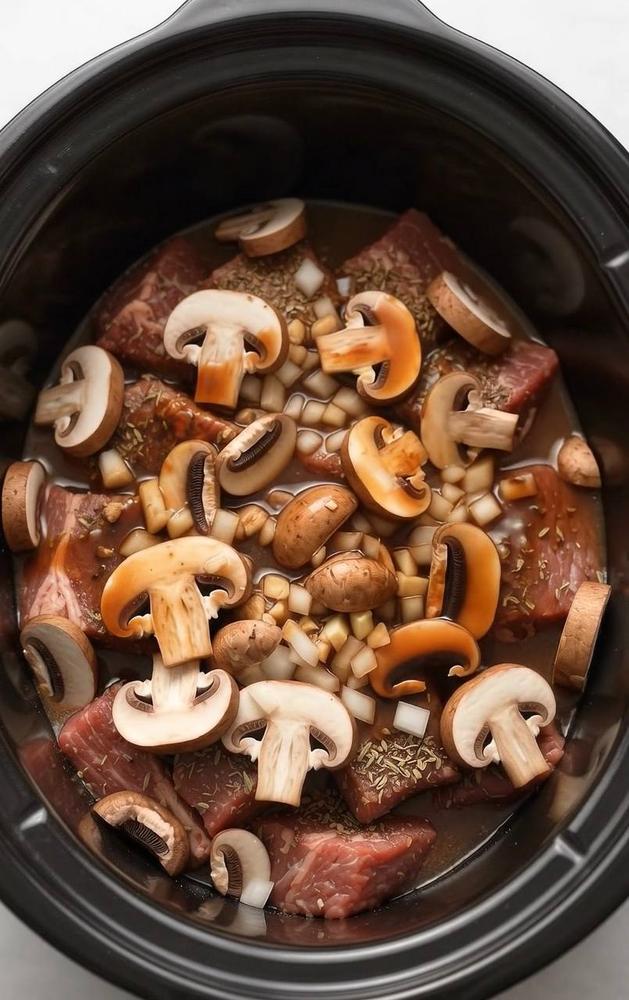
- Add the aromatics and mushrooms: To the slow cooker with the beef, add the diced onion, mushrooms, and minced garlic.
- Prepare the sauce: In a medium bowl, whisk together the condensed cream of mushroom soup, condensed cream of celery soup (if using), beef broth, red wine (if using), Worcestershire sauce, dried thyme, garlic powder, and onion powder until well combined.
- Combine in slow cooker: Pour the sauce mixture over the beef, onions, and mushrooms in the slow cooker. Stir gently to ensure all ingredients are coated.
- Season: Season generously with salt and freshly ground black pepper. Remember, you can always add more at the end, but it’s harder to remove.
- Cook: Cover the slow cooker and cook on LOW for 6-8 hours or on HIGH for 3-4 hours, or until the beef is fork-tender. The cooking time may vary slightly depending on your slow cooker and the cut of beef.
- Thicken the gravy (optional): If you prefer a thicker gravy, about 30 minutes before serving, create a cornstarch slurry. In a small bowl, whisk together 2 tablespoons of cornstarch with 2 tablespoons of cold water until smooth. Stir the slurry into the slow cooker. Cover and continue to cook on HIGH for the remaining 30 minutes, or until the gravy has thickened to your desired consistency.
- Taste and adjust: Before serving, taste the gravy and adjust seasonings as needed, adding more salt, pepper, or Worcestershire sauce if desired.
- Serve: Ladle the Slow Cooker Beef Tips with Mushrooms over mashed potatoes, egg noodles, rice, or with crusty bread. Garnish with fresh chopped parsley, if using.
Cooking Tips and Variations
For the most tender beef tips, selecting the right cut is crucial. Chuck roast or stew meat are excellent choices because they contain connective tissue that breaks down beautifully during long, slow cooking, resulting in incredibly tender, fall-apart beef. Sirloin tips can also be used, but they might be slightly less forgiving and could dry out if overcooked. When cutting the beef, aim for uniform 1-inch pieces to ensure even cooking.
While an extra step, browning the beef before adding it to the slow cooker is highly recommended. Searing creates a rich, caramelized crust on the meat, which translates to a deeper, more complex flavor in the final dish. This process, known as the Maillard reaction, develops savory notes that simply can’t be achieved otherwise. If you’re pressed for time, you can skip this step, but your patience will be rewarded with a more robust flavor profile.
Don’t be afraid to experiment with different types of mushrooms! While cremini (baby bella) and button mushrooms are readily available and work wonderfully, adding a mix of varieties can elevate the dish’s earthy notes. Consider incorporating shiitake for a more umami punch, or even some dried porcini mushrooms (rehydrated and chopped) for an intensely rich flavor. The mushrooms will absorb the delicious gravy, adding another layer of texture and taste.
The liquid level in your slow cooker is important. You want enough liquid to create a luscious gravy and keep the beef moist, but not so much that it becomes watery. The combined condensed soups and beef broth typically provide the perfect amount. Avoid the temptation to lift the lid frequently during cooking, as this releases heat and moisture, extending the overall cooking time. Trust your slow cooker to do its job!
This recipe is highly adaptable. To add more vegetables, consider stirring in some chopped carrots, celery, or even small potato chunks along with the onions and mushrooms at the beginning of the cooking process. For a touch of heat, a pinch of red pepper flakes can be added. If you’re not a fan of thyme, rosemary or a bay leaf would also complement the beef beautifully. For a richer, more robust flavor, you can swap out half of the beef broth for an equal amount of dry red wine, like a Cabernet Sauvignon or Merlot, allowing it to simmer down and deepen the sauce.
A crucial step for many is thickening the gravy. If you prefer a thicker, more luxurious sauce, a cornstarch slurry is your best friend. Whisking cornstarch with cold water prevents lumps and ensures a smooth, glossy gravy. Add it in the last 30 minutes of cooking on high heat, and watch as your sauce transforms. Alternatively, you can use a flour paste (equal parts flour and softened butter, kneaded together) for a similar effect, or simply let the sauce reduce uncovered on high for a short period if it’s too thin.
When it comes to serving, the possibilities are endless. Mashed potatoes are a classic pairing, their creamy texture providing the perfect canvas for the rich gravy. Egg noodles are another fantastic option, as they readily soak up all the delicious juices. Rice, polenta, or even crusty bread are also excellent choices. Don’t forget a sprinkle of fresh chopped parsley for a pop of color and freshness right before serving.
Storage and Reheating
Storing your Slow Cooker Beef Tips with Mushrooms properly will ensure you can enjoy the delicious leftovers for days. Once the dish has cooled completely, transfer it to an airtight container. It will keep well in the refrigerator for up to 3-4 days. For longer storage, this dish freezes exceptionally well. Portion the cooled beef tips and gravy into freezer-safe containers or heavy-duty freezer bags, removing as much air as possible to prevent freezer burn. It can be stored in the freezer for up to 3 months.
When reheating from the refrigerator, you can gently warm individual portions in the microwave until heated through, stirring occasionally. Alternatively, transfer the desired amount to a saucepan and reheat on the stovetop over medium-low heat, stirring frequently, until simmering and hot. If the gravy has thickened too much during storage, you can add a splash of beef broth or water to thin it out to your desired consistency.
To reheat from frozen, it’s best to thaw the beef tips in the refrigerator overnight. Once thawed, reheat using the stovetop or microwave methods described above. If you’re in a hurry, you can reheat directly from frozen on the stovetop over very low heat, adding a little liquid and stirring often, or in the microwave using a defrost setting followed by a regular heating cycle. Be sure to heat until the internal temperature reaches 165°F (74°C).
Frequently Asked Questions
Can I use frozen beef for this recipe?
While it’s generally best to start with thawed beef for optimal texture and even cooking, you can use frozen beef stew meat directly in the slow cooker for this recipe. However, be aware that it will likely add 1-2 hours to the overall cooking time, especially if the pieces are large. Ensure the beef reaches a safe internal temperature and is fork-tender before serving.
What if I don’t have a slow cooker? Can I make this in the oven?
Absolutely! This recipe can be adapted for oven cooking. After searing the beef (if desired) and combining all ingredients in an oven-safe Dutch oven or a large pot with a tight-fitting lid, cover and bake at 325°F (160°C) for approximately 2.5 to 3.5 hours, or until the beef is incredibly tender. Stir occasionally to prevent sticking and ensure even cooking. You can thicken the gravy on the stovetop after the beef is cooked.
How can I thicken the gravy without cornstarch?
If you prefer not to use cornstarch, you have a few alternatives. You can make a “flour paste” by whisking 2 tablespoons of all-purpose flour with 2 tablespoons of softened butter until smooth. Stir this mixture into the slow cooker during the last 30 minutes of cooking on high. Another option is to remove about 1/2 cup of the cooking liquid, whisk in 1 tablespoon of flour, and then return it to the slow cooker. Alternatively, for a gluten-free option, you can use arrowroot powder in the same way you would cornstarch (mixing it with cold water before adding), but add it closer to the very end of cooking as it can lose its thickening power if cooked too long.