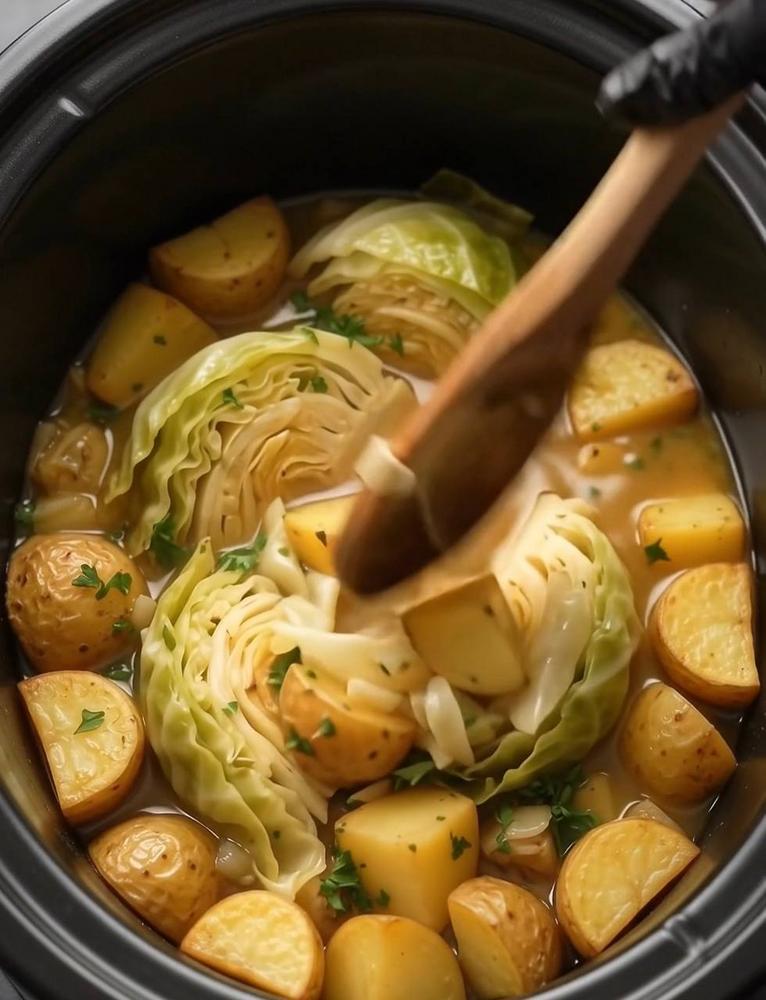
Instructions
- If desired for deeper flavor (highly recommended), heat olive oil in a large skillet over medium heat. Add chopped onion and cook until softened and translucent, about 5-7 minutes. Add minced garlic and cook for another minute until fragrant. Transfer the sautéed onions and garlic to the bottom of a 6-quart (or larger) slow cooker.
- Place the potato chunks evenly over the onions and garlic in the slow cooker.
- Arrange the cabbage wedges on top of the potatoes.
- Pour the vegetable broth over the vegetables.
- Add the undrained diced tomatoes to the slow cooker.
- Sprinkle in the dried thyme, dried rosemary, black pepper, and salt. If using, add the bay leaf.
- Stir gently to combine the seasonings and ensure everything is submerged in the broth as much as possible.
- Cover the slow cooker and cook on LOW for 6-8 hours, or on HIGH for 3-4 hours, or until potatoes are fork-tender and cabbage is soft. The exact cooking time may vary depending on your slow cooker.
- Once cooked, carefully remove the bay leaf if you used one.
- Stir the soup gently. Taste and adjust seasoning with additional salt and pepper if needed.
- Ladle the hot soup into bowls. Garnish generously with fresh chopped parsley before serving.
Cooking Tips and Variations
For the most flavorful soup, don’t skip the step of sautéing the onions and garlic before adding them to the slow cooker. This extra 10 minutes of effort builds a wonderful aromatic base that really enhances the soup’s depth. If you’re short on time, you can certainly skip this and add them raw, but the flavor will be less developed.
Choosing the right potatoes is key for this soup. Waxy or all-purpose potatoes like Yukon Golds, red potatoes, or new potatoes are ideal because they hold their shape well during long cooking times, giving you tender chunks rather than a mushy texture. Russet potatoes, while delicious, tend to break down more easily in soups.
Cutting the cabbage into larger wedges helps prevent it from becoming overly soft or disintegrating during the long slow cooking process. It allows the cabbage to retain some structure while still becoming beautifully tender and sweet. If you prefer smaller pieces, you can certainly cut it smaller, but be aware it might soften more significantly.
Always use a good quality broth, as it forms the foundation of your soup’s flavor. Vegetable broth keeps this recipe vegetarian, but chicken broth can also be used for a richer, more savory profile. Low-sodium varieties allow you to control the salt content precisely.
Flavor can concentrate in a slow cooker, so it’s always a good idea to taste and adjust your seasonings at the very end of cooking. A splash of apple cider vinegar or lemon juice stirred in just before serving can brighten the flavors and add a pleasant tang, cutting through the richness. A pinch of red pepper flakes can also add a subtle warmth if you like a hint of spice.
To vary this soup, consider adding protein. Smoked sausage (like kielbasa), diced ham, or crispy bacon bits can be stirred in during the last hour of cooking or added as a garnish. For a vegetarian protein boost, a can of rinsed and drained cannellini beans or chickpeas can be added along with the other vegetables. For a creamier texture, stir in a quarter cup of heavy cream or a dairy-free alternative like full-fat coconut milk (for a subtle coconut flavor) during the last 30 minutes of cooking, or swirl in a dollop of sour cream or Greek yogurt directly into individual bowls.
Don’t overcrowd your slow cooker. Ensure there’s enough space for the liquid to circulate and for the vegetables to cook evenly. If your slow cooker is too full, it might take longer to cook and the vegetables might not soften properly. If your slow cooker runs hot, check the soup earlier than the recommended time to prevent overcooking.
Storage and Reheating
This Slow Cooker Cabbage and Potato Soup is excellent for meal prep and stores beautifully. Once the soup has cooled completely, transfer it to airtight containers. It can be stored in the refrigerator for up to 3-4 days. Ensure the containers are sealed well to maintain freshness and prevent any absorption of refrigerator odors.
For reheating, individual portions can be warmed gently on the stovetop over medium-low heat, stirring occasionally, until heated through. You can also microwave individual servings in a microwave-safe bowl, heating in 1-2 minute intervals, stirring between each, until hot. Avoid overheating, as this can make the vegetables mushy. If the soup has thickened significantly during storage, you can add a splash of extra broth or water when reheating to reach your desired consistency.
This soup also freezes exceptionally well. Once completely cooled, transfer the soup to freezer-safe airtight containers or heavy-duty freezer bags. If using bags, lay them flat to freeze, which saves space. The soup can be stored in the freezer for up to 3 months. When ready to enjoy, thaw overnight in the refrigerator. Reheat thawed soup on the stovetop or in the microwave as described above. The texture of the potatoes might change slightly after freezing and thawing, becoming a bit softer, but the flavor will remain delicious.
Frequently Asked Questions
Can I make this soup vegetarian or vegan?
Yes, absolutely! This recipe is inherently vegetarian if you use vegetable broth. To make it vegan, simply ensure your broth is vegetable-based and avoid any dairy garnishes like sour cream or cheese. It’s a wonderfully hearty and satisfying plant-based meal as is.
What kind of cabbage is best for this soup?
Green cabbage is the best choice for this soup. It softens beautifully and develops a lovely sweetness when slow-cooked, holding its shape well. Red cabbage can also be used, but it might tint the broth a reddish-purple color, and its flavor is slightly stronger.
Can I add other vegetables to this soup?
Certainly! This soup is very adaptable. Carrots, celery, bell peppers, or even green beans would be excellent additions. Add harder vegetables like carrots and celery along with the potatoes, and softer vegetables like bell peppers or green beans during the last hour or two of cooking to prevent them from becoming too mushy.
Why are my potatoes mushy/too firm?
If your potatoes are mushy, it’s likely they were overcooked, or you used a starchy variety like Russets. For best results, stick to waxy or all-purpose potatoes (Yukon Gold, red potatoes) and monitor the cooking time. If they are too firm, they need more time. This can happen if your slow cooker runs cooler, or if the potatoes were cut too large. Ensure they are cut into uniform 1-inch chunks for even cooking.