Instructions
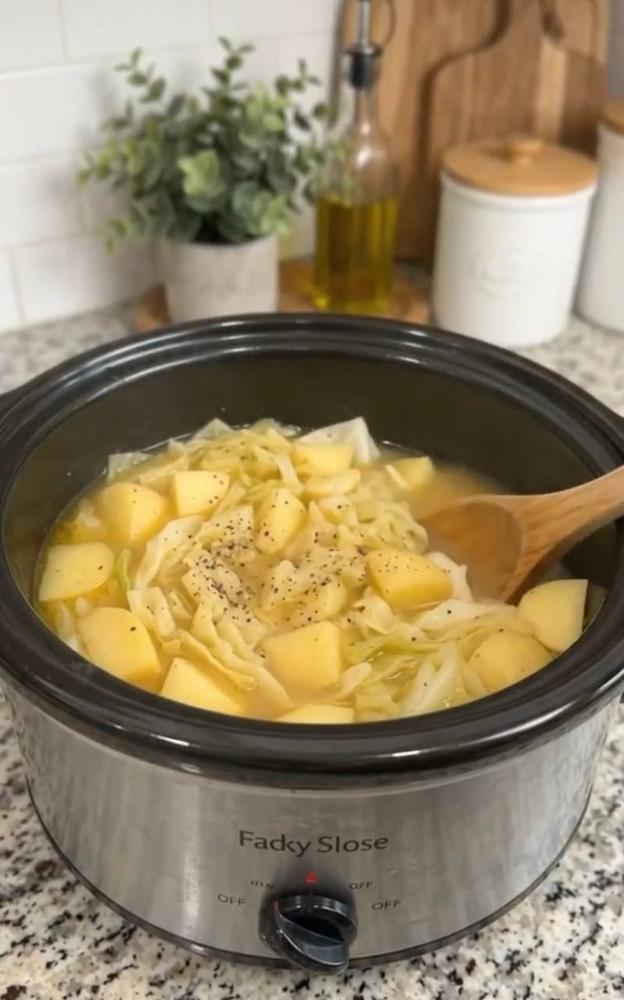
- Prepare the Vegetables: Core and cut the cabbage into thick 1-inch wedges or large shreds. Dice the potatoes into 1-inch cubes. Chop the onion and mince the garlic (if using).
- Layer the Ingredients: If desired, you can quickly sauté the chopped onion and minced garlic in 1 tablespoon of olive oil in a skillet for 5-7 minutes until softened and fragrant. This step adds an extra layer of flavor but is optional. If skipping, simply add them directly to the slow cooker.
- Add to Slow Cooker: Place the diced potatoes evenly on the bottom of your slow cooker. If you sautéed the onions and garlic, spread them over the potatoes.
- Add Cabbage: Arrange the cabbage wedges or shreds on top of the potatoes, filling the slow cooker as much as comfortably possible.
- Season and Add Liquid: Pour the chicken or vegetable broth over the vegetables. Sprinkle with dried thyme, salt, and freshly ground black pepper. Tuck in the bay leaf. The liquid should cover most, but not necessarily all, of the vegetables, as the cabbage will release additional moisture.
- Cook on Low or High: Cover the slow cooker with its lid.
- For Low Setting: Cook on LOW for 6-8 hours, or until the potatoes are fork-tender and the cabbage is soft.
- For High Setting: Cook on HIGH for 3-4 hours, or until the potatoes are fork-tender and the cabbage is soft.
- Finish and Serve: Once cooked, carefully remove the bay leaf. Stir in the optional butter for extra richness and the apple cider vinegar for a bright, tangy finish. Taste and adjust seasonings as needed, adding more salt or pepper if desired.
- Garnish: Ladle the Slow Cooker Cabbage and Potatoes into bowls. Garnish with fresh chopped parsley or dill, if using, and serve hot.
Cooking Tips and Variations
Potato Perfection: For the best results in a slow cooker, opt for waxy or all-purpose potatoes like Yukon Gold or red potatoes. These varieties hold their shape well during the long cooking process, preventing them from becoming mushy like starchier Russet potatoes might. Dicing them into uniform 1-inch cubes ensures even cooking.
Cabbage Care: While you can shred cabbage, cutting it into 1-inch thick wedges or larger pieces is often preferable for slow cooking. This helps it maintain some texture and prevents it from disappearing into the broth. Don’t worry if it looks like a lot of cabbage at first; it will cook down significantly.
Broth Level Balance: Aim for the broth to cover most, but not necessarily all, of the vegetables. Cabbage releases a good amount of moisture as it cooks, so you don’t want to start with too much liquid, or your dish could end up soupy. If you prefer a thicker consistency, you can remove some liquid at the end and thicken it with a cornstarch slurry, though this dish is typically enjoyed with its flavorful broth.
Flavor Boosters: Don’t underestimate the power of a good seasoning blend! In addition to salt, pepper, and thyme, consider adding a pinch of smoked paprika for depth, a dash of celery seed for classic comfort, or a pinch of red pepper flakes for a subtle kick. A splash of apple cider vinegar at the end brightens all the flavors and cuts through the richness, while a pat of butter adds a luxurious creaminess.
Adding Protein: This dish is fantastic on its own, but it also welcomes protein additions. Brown 1/2 pound of smoked sausage (like kielbasa), diced ham, or shredded corned beef (especially great with cabbage!) in a skillet before adding it to the slow cooker with the other ingredients. Crispy crumbled bacon added at the end is also a delicious topping.
Make it Vegetarian/Vegan: This recipe is easily adaptable. Simply ensure you use vegetable broth instead of chicken broth. The optional butter can be replaced with a plant-based butter alternative or omitted entirely. Without added meat, it remains a hearty and satisfying plant-based meal.
Don’t Overcrowd: While slow cookers are great for large batches, avoid packing the vegetables in too tightly. Leave a little room for the heat and moisture to circulate, ensuring everything cooks evenly.
Taste and Adjust: Always taste your dish before serving and adjust the seasonings. Slow cooking can sometimes mellow flavors, so a final sprinkle of salt and pepper can make all the difference.
Storage and Reheating
Storage: Once cooled, transfer any leftover Slow Cooker Cabbage and Potatoes to an airtight container. It will keep beautifully in the refrigerator for up to 3-4 days. This dish is excellent for meal prepping, as the flavors often deepen overnight.
Freezing: This dish freezes well! Allow it to cool completely, then transfer to freezer-safe containers or heavy-duty freezer bags. It can be stored in the freezer for up to 3 months. Thaw overnight in the refrigerator before reheating.
Reheating:
- Microwave: For individual portions, reheat in the microwave on high for 2-3 minutes, stirring halfway through, until heated through.
- Stovetop: For larger quantities, transfer to a saucepan or pot and reheat over medium-low heat, stirring occasionally, until simmering and thoroughly warmed. You may need to add a splash of extra broth or water if it seems too dry.
Frequently Asked Questions
Can I use different types of cabbage?
Yes, while green cabbage is traditional and works wonderfully, you can experiment with other types. Napa cabbage will cook down even faster and become very tender, while red cabbage will add a beautiful color and a slightly different flavor profile. Just be aware that red cabbage can sometimes tint the potatoes a purplish hue.
Do I have to peel the potatoes?
No, peeling the potatoes is entirely optional! Many people prefer to leave the skins on, especially for red or Yukon Gold potatoes, as they add extra fiber and nutrients. Just make sure to scrub them thoroughly before dicing.
My slow cooker dish seems a bit watery, what can I do?
Cabbage releases a lot of moisture, which can sometimes make the dish seem a bit watery. If you prefer a thicker consistency, you have a couple of options. You can remove some of the liquid with a ladle towards the end of cooking. Alternatively, you can create a slurry with 1 tablespoon of cornstarch mixed with 2 tablespoons of cold water, stir it into the slow cooker during the last 30 minutes of cooking, and it will help thicken the broth.
Can I add other vegetables to this dish?
Absolutely! This recipe is very flexible. Carrots, celery, parsnips, or even bell peppers would make excellent additions. Add harder vegetables like carrots and parsnips at the beginning with the potatoes, and softer vegetables like bell peppers or zucchini during the last hour of cooking to prevent them from becoming too mushy.