Instructions
- Prepare the Sausage (Optional but Recommended): In a large skillet, heat 1 tablespoon of olive oil over medium-high heat. Add the sliced smoked sausage and cook for 5-7 minutes, stirring occasionally, until browned and slightly crispy. This step adds an extra layer of flavor and texture, but can be skipped for a truly hands-off approach. Transfer the browned sausage to your slow cooker.
- Sauté Aromatics (Optional): In the same skillet (add a little more oil if needed), add the chopped onion, green bell pepper, red bell pepper, and celery (the “holy trinity”). Cook for 5-7 minutes, stirring occasionally, until the vegetables begin to soften. Add the minced garlic and cook for another minute until fragrant. Transfer the sautéed vegetables to the slow cooker with the sausage.
- Combine Ingredients in Slow Cooker: If skipping the sautéing steps, simply add the sliced sausage, chopped onion, bell peppers, celery, and minced garlic directly into the slow cooker.
- Add Wet and Dry Ingredients: Pour in the undrained diced tomatoes and Rotel diced tomatoes with green chilies. Add the chicken broth, Worcestershire sauce, dried oregano, dried thyme, smoked paprika, cayenne pepper, and bay leaf. Season with salt and freshly ground black pepper to taste, keeping in mind that the sausage and broth may already be salty.
- Stir and Cook: Stir all ingredients gently to combine. Cover the slow cooker and cook on LOW for 4-5 hours or on HIGH for 2-3 hours. The vegetables should be tender, and the flavors well-developed.
- Add the Rice: After the initial cooking time, stir the mixture well. Add the rinsed long-grain white rice to the slow cooker and stir to ensure it is fully submerged in the liquid.
- Continue Cooking: Cover the slow cooker again and continue to cook on HIGH for another 1 to 1.5 hours, or until the rice is tender and has absorbed most of the liquid. Check periodically and stir gently to prevent sticking and ensure even cooking. If the jambalaya seems too dry, you can add a splash more broth (¼ to ½ cup) during this stage. If it looks too wet, remove the lid for the last 30 minutes to allow some moisture to evaporate.
- Rest and Serve: Once the rice is cooked and tender, turn off the slow cooker. Remove the bay leaf. Let the jambalaya rest, covered, for 10-15 minutes before serving. This allows the flavors to meld further and the rice to firm up slightly.
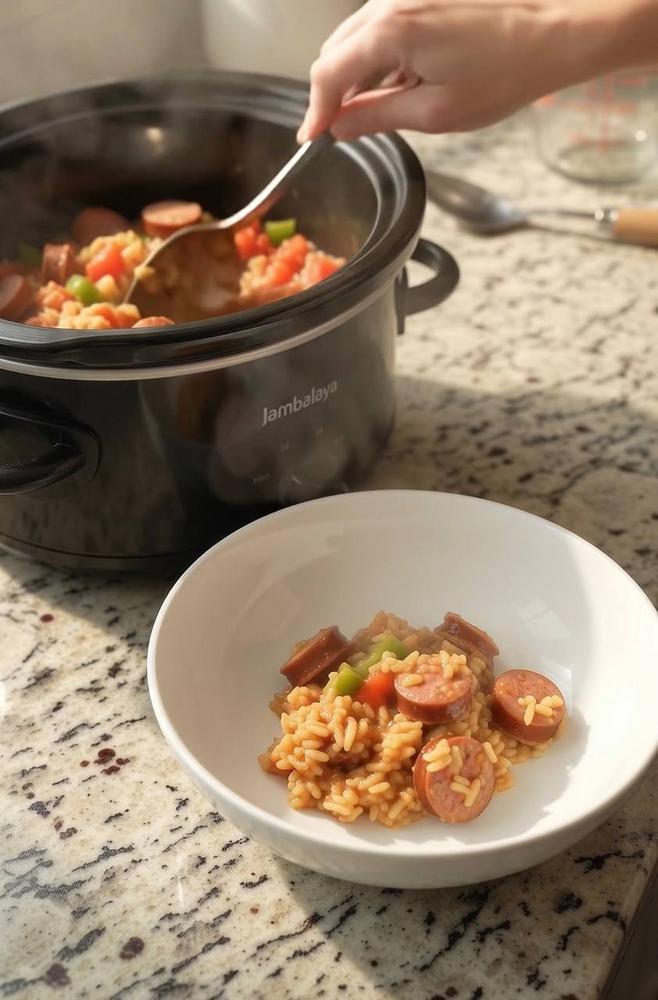
- Garnish and Enjoy: Garnish generously with fresh chopped parsley and sliced green onions, if desired. Serve hot and enjoy your delicious, homemade Slow Cooker Sausage Jambalaya!
Cooking Tips and Variations
To ensure your Slow Cooker Sausage Jambalaya turns out perfectly every time, consider these helpful tips. First, while searing the sausage and sautéing the “holy trinity” (onion, celery, bell pepper) before adding them to the slow cooker is an optional step, it’s highly recommended. This pre-cooking process deepens the flavor profile significantly, creating a richer, more complex base for your jambalaya. The caramelization on the sausage adds a smoky, savory crust, and softening the vegetables upfront helps them release their aromatic compounds, enhancing the overall taste of the dish. If you’re short on time, you can certainly skip this step, but for the best flavor, take those extra few minutes.
When it comes to the rice, the type and timing are crucial. Long-grain white rice is ideal for jambalaya as it cooks up fluffy and separate, rather than clumpy or mushy. Avoid using quick-cooking or instant rice, as it will overcook and become mushy in the slow cooker. Always rinse your rice thoroughly under cold water before adding it to the slow cooker. This removes excess starch, which helps prevent the rice from clumping and ensures a better texture. The timing of adding the rice is also critical: adding it too early will result in overcooked, mushy rice. Introduce it during the last 1 to 2 hours of cooking on high, or 2 to 3 hours on low, to achieve that perfect al dente texture while still allowing it to absorb all the wonderful flavors.
Don’t be afraid to customize your jambalaya to suit your taste. For an extra kick, increase the amount of cayenne pepper or add a few dashes of your favorite hot sauce directly into the slow cooker. You can also serve extra hot sauce on the side for those who prefer a spicier dish. To make it a more substantial, protein-packed meal, consider adding other meats. Diced chicken (boneless, skinless thighs or breasts work best) can be added at the beginning of the cooking process along with the sausage. If adding shrimp, stir them in during the last 20-30 minutes of cooking to prevent them from becoming tough and rubbery. For a vegetarian twist, you could omit the meat and add extra vegetables like corn, okra, or kidney beans. Just be mindful of the liquid ratio if adding a lot of extra ingredients.
The liquid ratio for slow cooker rice dishes can be tricky, as slow cookers retain a lot of moisture. Our recipe provides a good starting point, but always monitor the jambalaya during the rice cooking stage. If it appears too dry and the rice isn’t cooking through, add ¼ to ½ cup of additional chicken broth. If it seems too wet and the rice is cooked but sitting in excess liquid, remove the lid for the last 30 minutes of cooking to allow some of the moisture to evaporate. Finally, a fresh garnish makes a world of difference. Chopped fresh parsley and sliced green onions not only add a pop of vibrant color but also introduce a fresh, herbaceous counterpoint to the rich flavors of the jambalaya, brightening the dish and making it even more appealing.
Storage and Reheating
Proper storage and reheating are key to enjoying your Slow Cooker Sausage Jambalaya for days to come. Once the jambalaya has cooled completely, transfer it to airtight containers. It will keep well in the refrigerator for up to 3-4 days. For longer storage, jambalaya freezes beautifully. Divide it into individual portions in freezer-safe containers or heavy-duty freezer bags, removing as much air as possible to prevent freezer burn. It can be stored in the freezer for up to 3 months. Thaw frozen jambalaya overnight in the refrigerator before reheating.
To reheat, for individual portions, the microwave is your best friend. Place a serving in a microwave-safe bowl, cover loosely, and heat on high for 2-3 minutes, stirring halfway through, until heated through. If the jambalaya seems a little dry, add a tablespoon or two of chicken broth or water before reheating to restore moisture. For larger quantities, or if you prefer stovetop reheating, transfer the jambalaya to a large pot or skillet over medium-low heat. Add a splash of chicken broth or water (about ¼ cup per 2-3 servings) to prevent sticking and dryness. Stir frequently until heated evenly. Avoid overheating, as this can make the rice mushy or dry out the sausage. With these methods, your leftover jambalaya will taste almost as good as it did fresh!
Frequently Asked Questions
What kind of sausage is best for Jambalaya?
For authentic flavor, smoked Andouille sausage is highly recommended due to its spicy and smoky profile. However, if Andouille isn’t available or if you prefer a milder taste, smoked Kielbasa or another type of savory smoked pork sausage can be used as a delicious alternative. Just ensure it’s fully cooked before adding it to the slow cooker.
Can I add other vegetables to this recipe?
Absolutely! Jambalaya is very versatile. You can enhance the vegetable content by adding corn, sliced okra, or even a can of drained kidney beans for extra fiber and texture. If adding softer vegetables like corn or okra, stir them in during the last hour of cooking to prevent them from becoming too mushy.
My jambalaya seems too dry/too wet. What went wrong?
Slow cookers can vary in how much moisture they retain. If your jambalaya is too dry, it likely needs more liquid; add ¼ to ½ cup of chicken broth, stir, and continue cooking until the rice is tender. If it’s too wet, the lid might have been on too tightly, or your slow cooker runs cooler. To fix this, remove the lid for the last 30 minutes of cooking to allow excess moisture to evaporate, or cook uncovered on high for a bit longer until the desired consistency is reached. Next time, you may need to adjust the initial liquid amount slightly.
Can I make this recipe spicier or milder?
Yes, easily! To increase the heat, add more cayenne pepper (start with an extra ¼ teaspoon and adjust to taste), a pinch of red pepper flakes, or a few dashes of your favorite hot sauce like Tabasco or Louisiana hot sauce. To make it milder, simply reduce or omit the cayenne pepper. The Rotel diced tomatoes with green chilies provide a mild background heat, but you can use plain diced tomatoes if you want zero spice.