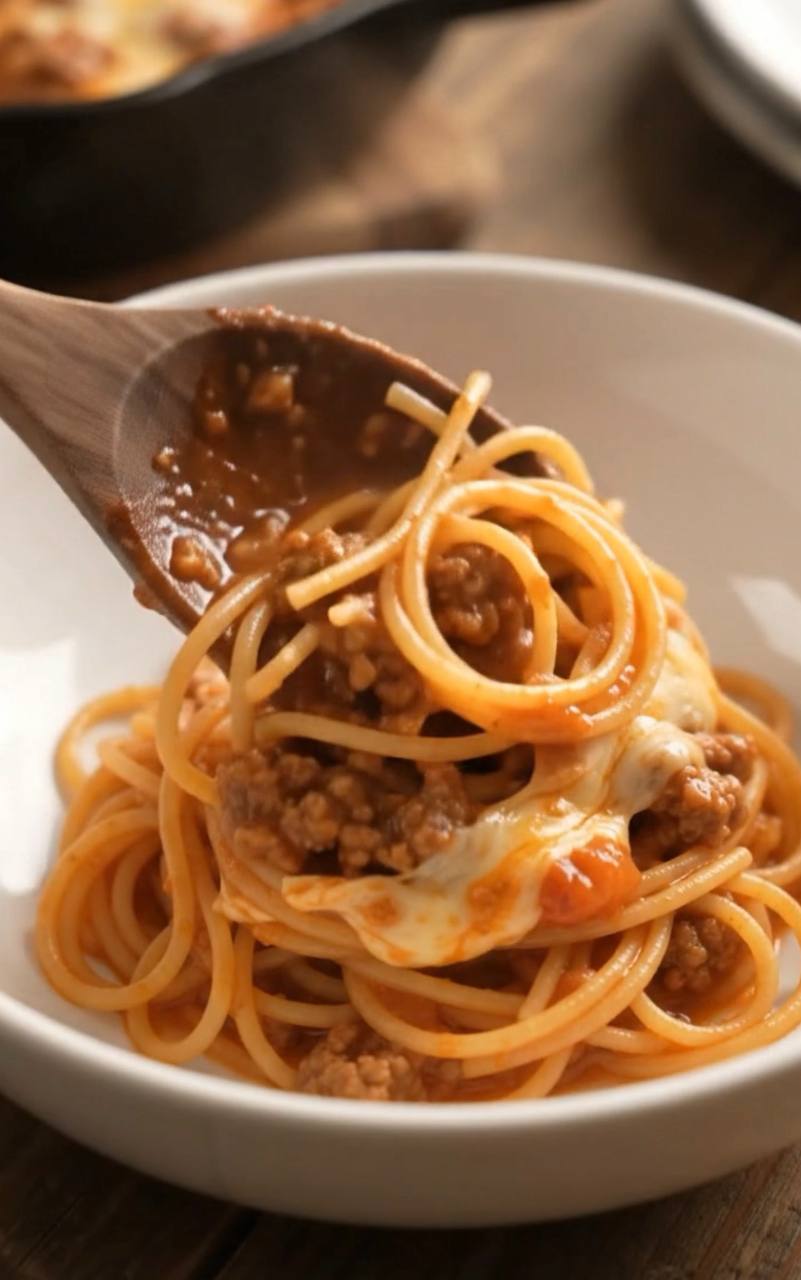
Instructions
- Preheat your oven to 375°F (190°C).
- Heat the olive oil in a large, oven-safe cast iron skillet over medium-high heat. Add the ground beef and cook, breaking it up with a spoon, until fully browned and no pink remains. Drain off any excess grease and set the cooked beef aside.
- Reduce the heat to medium. Add the chopped onion to the same skillet and cook, stirring occasionally, until softened and translucent, about 5-7 minutes.
- Add the minced garlic to the skillet and cook for another minute until fragrant, being careful not to burn it.
- Stir in the crushed tomatoes, tomato sauce, diced tomatoes (with their liquid), beef broth (or water), dried oregano, dried basil, red pepper flakes (if using), sugar (if using), salt, and black pepper. Bring the sauce to a gentle simmer.
- Return the cooked ground beef to the skillet, stirring to combine it with the sauce. Reduce the heat to low, cover the skillet, and let the sauce simmer for at least 15-20 minutes to allow the flavors to meld. Stir occasionally to prevent sticking.
- While the sauce is simmering, cook the spaghetti according to package directions in a separate pot until al dente. Drain thoroughly.
- Add the cooked spaghetti to the skillet with the meat sauce. Use tongs to gently toss the spaghetti until it is fully coated in the sauce.
- Sprinkle half of the shredded mozzarella and provolone cheese evenly over the spaghetti. Gently stir to incorporate some of the cheese into the pasta, then spread the spaghetti mixture evenly in the skillet.
- Top the spaghetti with the remaining shredded mozzarella and provolone cheese, ensuring a generous, even layer across the top.
- Transfer the skillet to the preheated oven and bake for 15-20 minutes, or until the cheese is melted, bubbly, and lightly golden brown on top. For an extra golden crust, you can turn on the broiler for the last 1-2 minutes, watching carefully to prevent burning.
- Carefully remove the skillet from the oven. Let it rest for 5-10 minutes before serving. This allows the cheese to set slightly and makes serving easier.
- Garnish with fresh chopped parsley or basil, if desired, and serve directly from the skillet.
Cooking Tips and Variations
To achieve the best results with your skillet spaghetti, start with good quality ingredients. Using 80/20 ground beef provides enough fat for flavor without being overly greasy. When browning the meat, ensure it’s truly browned for maximum flavor development; don’t just cook it until it’s no longer pink. Draining excess fat is crucial for a cleaner sauce. For the aromatics, take your time sautéing the onions until they are soft and translucent, as this builds a sweet base for your sauce. When adding the garlic, cook it just until fragrant, about 30-60 seconds, to avoid bitterness. Simmering the sauce for at least 15-20 minutes is key; this allows the herbs and spices to fully infuse the tomatoes and meat, deepening the overall flavor. For the pasta, cook it slightly under al dente if you plan to bake it for a longer period, as it will continue to cook in the oven and absorb some of the sauce, preventing it from becoming mushy. Don’t be shy with the cheese layer; a generous amount ensures that irresistible gooey, bubbly top. Always use an oven-safe skillet, preferably cast iron, as it retains heat beautifully and goes seamlessly from stovetop to oven.
This recipe is also incredibly versatile and can be adapted to suit various tastes and dietary needs. For a different meat profile, try using ground Italian sausage (mild or hot for a kick), ground turkey, or a combination of ground beef and pork. If you’re looking for a vegetarian option, plant-based crumbles work wonderfully in place of meat. Feel free to experiment with different cheeses; a blend of cheddar and Monterey Jack can offer a different flavor and melt, or for a sharper taste, a sprinkle of grated Parmesan or Pecorino Romano mixed in with the mozzarella and provolone adds depth. To boost the vegetable content, sauté finely diced bell peppers, mushrooms, or shredded carrots along with the onions. A handful of fresh spinach or kale can be stirred into the sauce just before baking. If you prefer a one-pot method where the pasta cooks directly in the sauce, you’ll need to increase the liquid (broth or water) significantly and cook the pasta uncovered, stirring frequently, until tender and the liquid is absorbed. Just be aware that this method can sometimes lead to a starchier sauce and requires more attention. Finally, consider adding a splash of red wine to the sauce after sautéing the aromatics and before adding the tomatoes; let it reduce by half to add another layer of complexity to the flavor.
Storage and Reheating
This Skillet Spaghetti with Minced Meat and Melted Cheese is fantastic for meal prepping or enjoying as leftovers, as the flavors often deepen overnight. To store, allow the dish to cool completely to room temperature. Once cooled, you can either cover the entire skillet tightly with aluminum foil or transfer individual portions to airtight containers. Properly stored in the refrigerator, this dish will remain fresh for 3-4 days.
For reheating, if you’re reheating the entire skillet, cover it with aluminum foil and bake in a preheated oven at 350°F (175°C) for 20-30 minutes, or until heated through. You might want to remove the foil for the last 5-10 minutes to crisp up the cheese again. If reheating individual portions, the microwave is your quickest option. Place a serving in a microwave-safe dish, cover loosely, and heat on high for 2-3 minutes, stirring halfway through, until hot. For best results and to avoid dry pasta, you can add a tablespoon or two of water or broth to the dish before microwaving. Alternatively, individual portions can be reheated in a small oven-safe dish, covered with foil, at 350°F (175°C) for about 15-20 minutes. Freezing is also an option; transfer cooled portions to freezer-safe containers and freeze for up to 2-3 months. Thaw overnight in the refrigerator before reheating.
Frequently Asked Questions
Can I use a different type of pasta?
Absolutely! While spaghetti is traditional and works beautifully, you can easily substitute other long pastas like linguine, bucatini, or even fettuccine. Shorter pastas like penne or rigatoni would also work, turning it into more of a pasta bake, but still just as delicious. Adjust cooking times according to package directions, remembering to cook slightly under al dente if baking.
What if I don’t have an oven-safe skillet?
If you don’t have an oven-safe skillet, you can still make this delicious dish! Prepare the meat sauce and cook the spaghetti as instructed. Once combined, transfer the entire mixture to a greased 9×13 inch baking dish. Top with the cheese and bake in the preheated oven as directed. The result will be just as cheesy and comforting, though you’ll miss the rustic charm of serving directly from the skillet.
Can I make this dish ahead of time?
Yes, you can! To save time, prepare the meat sauce completely and cook the spaghetti. Store them separately in airtight containers in the refrigerator for up to 2 days. When you’re ready to bake, combine the sauce and pasta in your skillet or baking dish, top with cheese, and bake as instructed, adding an extra 10-15 minutes to the baking time to ensure it’s heated through. You can also assemble the entire dish (without baking) and refrigerate it for up to 24 hours, then bake when ready, again adding extra time for heating.
How can I make this dish spicier?
If you love a little heat, there are several ways to amp up the spice. Increase the amount of red pepper flakes to 1 teaspoon or more, to your preference. You could also use hot Italian sausage instead of ground beef, or add a pinch of cayenne pepper to the sauce. Serving with a side of your favorite hot sauce or extra red pepper flakes for individual customization is also a great option.