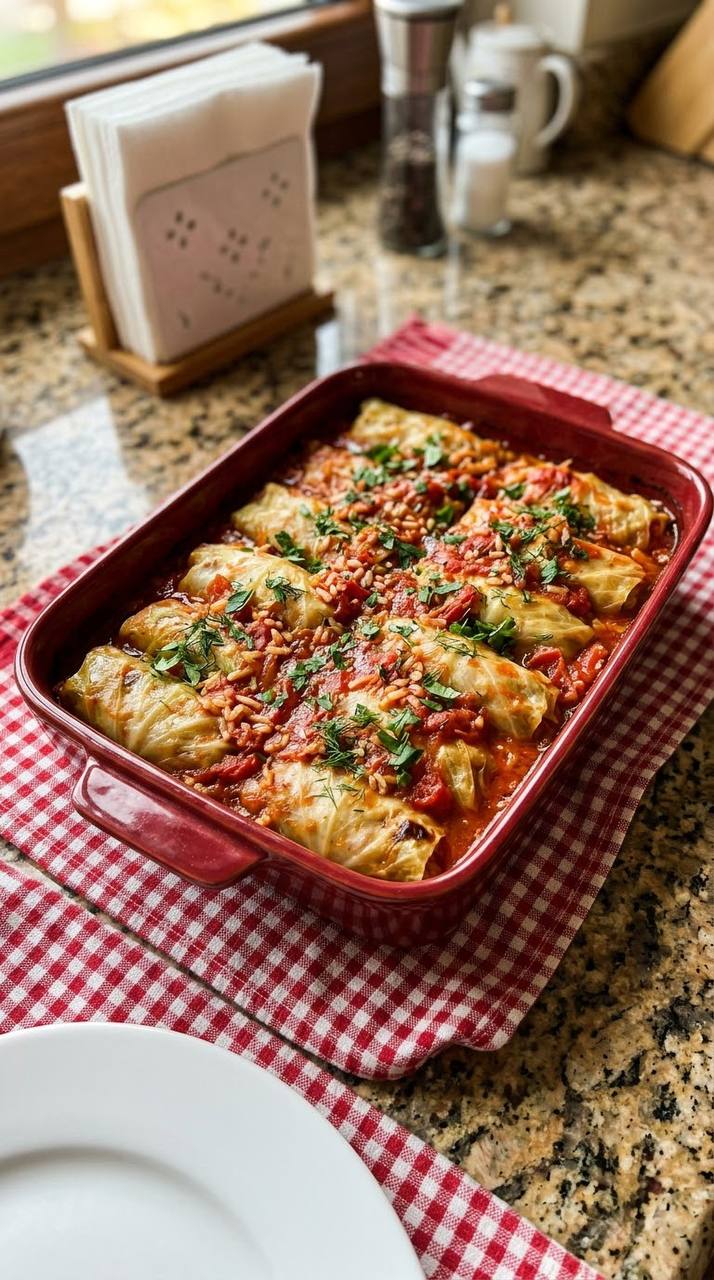
Instructions
- Prepare the Cabbage: Carefully remove the core from the cabbage head using a sharp knife. In a large pot, bring a generous amount of salted water to a rolling boil. Carefully place the whole cabbage head into the boiling water, core-side down. Cook for 5-10 minutes, or until the outer leaves begin to soften and peel off easily. Using tongs, gently peel off the softened leaves one by one. If the cabbage becomes too firm to peel, return it to the hot water for a few more minutes. Once all usable leaves are removed, trim the thickest part of the central vein from each leaf to make them more pliable for rolling. Set aside.
- Make the Filling: In a large mixing bowl, combine the ground meat, rinsed uncooked rice, half of the finely chopped onion, half of the minced garlic, the beaten egg, 1/4 cup chopped fresh dill, 1/4 cup chopped fresh parsley, 1 teaspoon salt, 1 teaspoon black pepper, and 1 teaspoon paprika. Mix thoroughly with your hands until all ingredients are well combined. Do not overmix.
- Assemble the Rolls: Lay a softened cabbage leaf flat on a clean surface. Place a generous spoonful (about 2-3 tablespoons) of the meat filling near the stem end of the leaf. Fold the stem end over the filling, then fold in the sides of the leaf, and finally roll tightly from the bottom up, creating a compact parcel. Repeat with the remaining cabbage leaves and filling. If you run out of usable large leaves, you can chop any remaining small leaves or tough parts and use them to line the bottom of your baking dish.
- Prepare the Sauce: In a large Dutch oven or oven-safe pot, heat the olive oil over medium heat. Add the remaining half of the chopped onion and cook until softened, about 5-7 minutes. Add the remaining minced garlic and cook for another minute until fragrant. Stir in the crushed tomatoes, tomato paste, beef or chicken broth, optional sugar (if using), and bay leaves. Bring the sauce to a gentle simmer, then reduce heat to low and let it cook for at least 10 minutes to allow the flavors to meld. Season the sauce with additional salt and pepper to taste.
- Arrange and Bake: Preheat your oven to 350°F (175°C). Pour about 1 cup of the tomato sauce into the bottom of your Dutch oven or a large baking dish (9×13 inches works well). Arrange the assembled cabbage rolls snugly in a single layer over the sauce. If necessary, you can stack them in a second layer. Pour the remaining tomato sauce evenly over the cabbage rolls, ensuring they are mostly submerged.
- Bake Until Tender: Cover the Dutch oven or baking dish tightly with a lid or aluminum foil. Bake for 1 hour. After 1 hour, reduce the oven temperature to 325°F (160°C) and continue to bake for another 1.5 to 2 hours, or until the cabbage is very tender and the rice and meat filling are fully cooked. The total baking time will be between 2.5 to 3 hours.
- Garnish and Serve: Once cooked, remove the bay leaves. Let the cabbage rolls rest for 10-15 minutes before serving. Garnish generously with fresh chopped dill and parsley. Serve hot, optionally alongside additional cooked white rice.
Cooking Tips and Variations
Choosing the Right Cabbage: Always opt for a large, firm head of green cabbage with intact, unblemished leaves. A larger head yields larger leaves, which are easier to work with and can hold more filling. Avoid cabbages with cracked or discolored outer leaves.
Cabbage Softening Methods: While boiling is traditional, you can also freeze the whole cabbage head overnight. Thaw it completely, and the leaves will naturally soften and become pliable, often even more so than boiling, making them incredibly easy to peel and roll without tearing. This method also helps retain more nutrients.
Don’t Overfill: While tempting to pack in the filling, overfilling your cabbage rolls can cause them to burst during cooking. Aim for about 2-3 tablespoons of filling per medium-sized leaf, ensuring you can still roll it tightly without strain.
Tight Rolling is Key: A tightly rolled cabbage roll holds its shape better and prevents the filling from escaping into the sauce. After folding the sides in, roll from the bottom up, applying gentle but firm pressure.
Layering for Success: To prevent the bottom rolls from sticking or burning, line the bottom of your baking dish with any leftover small cabbage leaves, tough vein trimmings, or even a thin layer of sauce before arranging the rolls. This creates a protective, flavorful bed.
Acidity Balance in Sauce: Tomatoes can vary in acidity. Always taste your sauce before pouring it over the rolls. If it tastes too tart, a pinch or two of sugar can work wonders to balance the flavors without making it overtly sweet. A dash of balsamic vinegar can also add depth.
Filling Customization:
- Meat: Experiment with different ground meats – lamb, turkey, or even a mix of all three. For a richer flavor, a blend of beef and pork is classic.
- Vegetarian Option: For a delicious vegetarian version, swap the meat for a hearty mix of sautéed mushrooms, lentils, quinoa, and finely chopped vegetables like carrots and celery.
- Spice Level: Add a pinch of red pepper flakes to the filling or sauce for a subtle kick, or a touch of smoked paprika for a deeper, earthier flavor.
- Herbs: While dill and parsley are traditional, feel free to add other herbs like marjoram or thyme to the filling for a different aromatic profile.
Sauce Variations:
- Creamy Tomato Sauce: Stir in a few tablespoons of sour cream or heavy cream into the sauce during the last 30 minutes of cooking for a richer, creamier finish.
- Smoky Flavor: Add a strip of bacon or a smoked ham hock to the sauce while it simmers for an extra layer of smoky depth. Remove before serving.
Resting Time: Just like with roasted meats, allowing the cabbage rolls to rest for 10-15 minutes after baking allows the juices to redistribute and the flavors to settle, making them easier to serve and even more delicious.
Storage and Reheating
Stuffed Cabbage Rolls are a fantastic make-ahead meal and often taste even better the next day as the flavors have more time to meld.
Refrigeration: Allow the cooked cabbage rolls to cool completely. Transfer them along with the sauce to an airtight container. They can be stored in the refrigerator for up to 3-4 days.
Freezing: Stuffed cabbage rolls freeze exceptionally well.
- Cooked Rolls: Once cooled, transfer the rolls and sauce to freezer-safe containers or heavy-duty freezer bags. Ensure there is minimal air in the container to prevent freezer burn. They can be frozen for up to 3 months. Thaw overnight in the refrigerator before reheating.
- Uncooked Rolls (Optional): You can also freeze uncooked rolls. Prepare the rolls as directed, but do not bake. Arrange them in a single layer on a baking sheet and freeze until solid. Transfer the frozen rolls to a freezer-safe bag or container. When ready to cook, place the frozen rolls in a baking dish, cover with sauce, and bake as directed, adding about an hour to the cooking time, or until fully cooked and tender.
Reheating:
- Oven: For best results, reheat in the oven. Place the desired number of rolls and sauce in an oven-safe dish, cover with foil, and bake at 325°F (160°C) for 20-30 minutes, or until heated through.
- Stovetop: Gently reheat individual portions in a saucepan over medium-low heat, stirring occasionally, until warmed through. Add a splash of broth or water if the sauce seems too thick.
- Microwave: For a quick reheat, place a single serving in a microwave-safe dish, cover, and microwave on high for 2-4 minutes, stirring halfway through, until hot.
Frequently Asked Questions
Can I make Stuffed Cabbage Rolls ahead of time?
Absolutely! Stuffed Cabbage Rolls are an excellent make-ahead dish. You can assemble them a day in advance and store them in the refrigerator, covered with sauce, before baking. Alternatively, you can bake them completely, cool them, and then refrigerate for up to 3-4 days. The flavors often deepen and improve overnight, making them even more delicious the next day.
What kind of cabbage is best for this recipe?
A large head of green cabbage (often labeled as “common green cabbage” or “Dutch cabbage”) is ideal. Look for a firm head with large, pliable leaves that are easy to peel and roll. Savoy cabbage can also be used, but its leaves are a bit more crinkly and delicate, requiring a gentler hand.
Why did my cabbage rolls fall apart during cooking?
There are a few common reasons. The most likely causes are that the cabbage leaves weren’t softened enough, making them difficult to roll tightly, or the rolls were overstuffed, causing them to burst. Ensure your leaves are very pliable before rolling and that you roll them as snugly as possible without overpacking the filling. Also, ensure they are cooked in enough sauce to keep them moist and protected.
Can I use brown rice instead of white rice in the filling?
Yes, you can substitute brown rice for white rice, but be aware that brown rice takes longer to cook. If using brown rice, it’s recommended to par-cook it (boil it for about 10-15 minutes) before mixing it into the filling, as it might not fully cook to tenderness within the standard baking time for the rolls. Alternatively, you can extend the overall baking time of the cabbage rolls by an additional 30-60 minutes to ensure the brown rice is fully cooked.