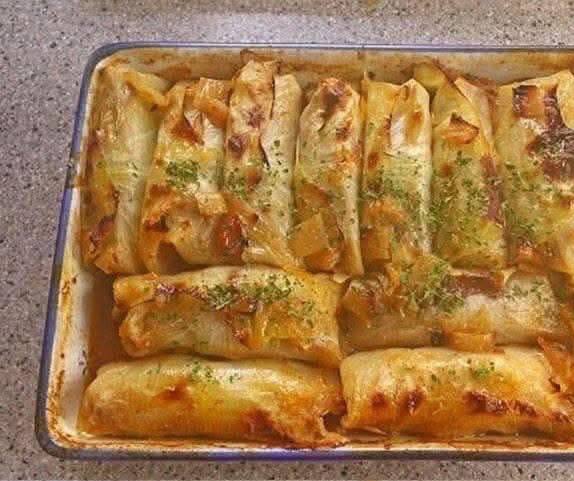
Instructions
- Prepare the Cabbage: Carefully remove the core from the cabbage head using a paring knife. Bring a large pot of salted water to a boil. Submerge the whole cabbage head in the boiling water for 5-10 minutes, or until the outer leaves soften and can be easily peeled off. Using tongs, carefully peel off the softened leaves, one by one. As you peel, if the inner leaves are still firm, return the cabbage head to the boiling water for a few more minutes. You’ll need about 12-16 large, pliable leaves. Trim any thick, tough veins from the base of each leaf to make rolling easier. Reserve any remaining small inner cabbage pieces for the bottom of the baking dish.
- Prepare the Filling: In a large mixing bowl, combine the ground beef, ground pork (if using), uncooked rice, chopped onion, minced garlic, beaten egg, chopped parsley, dried dill, 1 teaspoon salt, 0.5 teaspoon black pepper, and paprika. Mix thoroughly with your hands until all ingredients are well combined, but do not overmix.
- Prepare the Sauce: In a separate bowl, whisk together the crushed tomatoes, tomato sauce, water (or beef broth), brown sugar, apple cider vinegar, Worcestershire sauce, 0.5 teaspoon salt, and 0.25 teaspoon black pepper. Taste and adjust seasonings as needed; you might want more sugar for sweetness or vinegar for tang.
- Assemble the Rolls: Lay a prepared cabbage leaf flat on a clean surface with the stem end facing you. Place about 2-3 tablespoons of the meat mixture near the stem end. Fold the stem end up over the filling, then fold in the sides towards the center. Roll the cabbage leaf away from you, creating a snug, compact cylinder. Repeat with the remaining cabbage leaves and filling.
- Prepare the Baking Dish: Lightly grease a large baking dish (a 9×13 inch or similar size works well). If you have any leftover small cabbage pieces or torn leaves, roughly chop them and spread them evenly over the bottom of the baking dish. This creates a bed for the rolls and prevents them from sticking.
- Arrange the Rolls: Place the assembled cabbage rolls seam-side down in the prepared baking dish. Arrange them snugly next to each other in a single layer, or in two layers if necessary, to ensure they fit tightly.
- Add the Sauce: Pour the prepared tomato sauce evenly over the cabbage rolls, making sure they are mostly submerged.
- Bake the Cabbage Rolls: Cover the baking dish tightly with aluminum foil. Bake in a preheated oven at 350°F (175°C) for 1 hour and 30 minutes.
- Uncover and Finish Baking: After 1 hour and 30 minutes, remove the foil. Continue baking uncovered for another 30-45 minutes, or until the cabbage is very tender, the filling is cooked through, and the sauce has thickened slightly. The tops of the rolls might get a little caramelized, which adds to the flavor.
- Rest and Serve: Once baked, remove the dish from the oven and let the stuffed cabbage rolls rest for 10-15 minutes before serving. This allows the flavors to meld and the rolls to firm up slightly. Garnish with fresh parsley or dill, and serve with a dollop of sour cream or Greek yogurt, if desired.
Cooking Tips and Variations
Cabbage Selection and Preparation: Choose a large, firm head of green cabbage with intact leaves. Savoy cabbage can also be used for a slightly more delicate texture and ruffled appearance. When softening the cabbage, don’t overcook the leaves; they need to be pliable enough to roll but not mushy. If you struggle with peeling leaves, you can also freeze the whole cabbage head overnight, then thaw it. The freezing process naturally breaks down the cell walls, making the leaves incredibly easy to separate and roll. Just be sure to drain any excess water after thawing.
Perfecting the Filling: For an even more flavorful filling, sauté the chopped onion and garlic in a little olive oil until softened before mixing them with the meat and rice. This deepens their flavor. If you prefer a richer filling, consider adding a tablespoon of tomato paste to the meat mixture. Using medium-grain rice is crucial as it absorbs moisture well and gives the filling a tender, cohesive texture. Avoid long-grain rice, which can dry out, or short-grain/sticky rice, which can become too gummy.
Rolling Techniques: Don’t overfill your cabbage leaves; about 2-3 tablespoons of filling per large leaf is usually sufficient. Overfilling can lead to bursting during baking. The key to a secure roll is to fold the stem end over the filling first, then fold in the sides, and finally roll tightly away from you. If a leaf tears, simply overlap two smaller leaves or use a piece of a torn leaf to patch it up – they’ll cook down beautifully in the sauce.
Sauce Customization: The sauce is highly adaptable. For a sweeter sauce, increase the brown sugar. For more tang, add extra apple cider vinegar or a squeeze of fresh lemon juice. A pinch of red pepper flakes can add a subtle kick. You can also experiment with adding a bay leaf or a sprig of fresh thyme to the sauce while it bakes for an added layer of aroma.
Variations:
- Vegetarian Stuffed Cabbage: Replace the ground meat with a mixture of cooked lentils, sautéed mushrooms, quinoa, and finely chopped vegetables like carrots and celery. Add a smoky flavor with a touch of smoked paprika.
- Different Meats: Instead of beef and pork, try ground turkey or chicken for a lighter option, though you might want to add a bit more fat (like olive oil) to the filling to prevent dryness. Lamb is also a delicious and traditional choice in some cuisines.
- Creamy Sauce: For a richer, creamier dish, stir in 0.5 cup of sour cream or heavy cream into the sauce during the last 30 minutes of baking.
- Spicy Kick: Incorporate a diced jalapeño or a pinch of cayenne pepper into the filling, or add more red pepper flakes to the sauce.
- Smoky Flavor: A tablespoon of liquid smoke or a few strips of bacon laid over the rolls before baking can impart a wonderful smoky depth.
Baking Dish and Moisture: Ensure your baking dish is snug enough to hold the rolls tightly. This prevents them from unraveling and helps them cook evenly. It’s crucial to have enough sauce to keep the rolls submerged and moist during the long baking time. If the sauce seems to be evaporating too quickly, you can add a little more water or broth. The initial covering with foil helps steam the rolls, ensuring the cabbage becomes tender and the rice cooks thoroughly.
Resting Time: Do not skip the resting time! Letting the rolls sit for 10-15 minutes after baking allows the internal temperatures to equalize, the filling to set, and the flavors to deepen. This also makes them easier to handle and serve without falling apart.
Storage and Reheating
Storage: Stuffed cabbage rolls are an excellent make-ahead meal and often taste even better the next day as the flavors have more time to meld. Once completely cooled, transfer any leftover rolls and sauce to an airtight container. They will keep well in the refrigerator for 3-4 days.
For longer storage, stuffed cabbage rolls freeze beautifully. Once cooled, you can freeze individual rolls or portions of rolls with sauce in freezer-safe containers or heavy-duty freezer bags. Ensure there’s minimal air in the container to prevent freezer burn. They can be frozen for up to 3 months.
Reheating:
- From the Refrigerator:
- Oven: Preheat your oven to 350°F (175°C). Place the rolls and sauce in an oven-safe dish, cover with foil, and bake for 20-30 minutes, or until heated through.
- Microwave: For individual servings, place a roll or two with sauce in a microwave-safe dish, cover loosely, and heat on medium-high for 2-4 minutes, stirring the sauce halfway through, until hot.
- From the Freezer:
- Oven: For best results, thaw frozen rolls in the refrigerator overnight. Then, follow the reheating instructions for refrigerated rolls. If reheating from frozen, place them in an oven-safe dish with sauce, cover tightly with foil, and bake at 350°F (175°C) for 45-60 minutes, or until heated through, stirring the sauce gently halfway.
- Stovetop: You can also gently reheat frozen or thawed rolls in a large pot or Dutch oven over low to medium heat, covered, stirring occasionally to prevent sticking, until thoroughly heated. Add a splash of water or broth if the sauce seems too thick.
Frequently Asked Questions
What kind of cabbage is best for stuffed cabbage rolls?
A large head of green cabbage is typically the best choice. Look for one that is firm and heavy for its size with intact, pliable outer leaves. Savoy cabbage can also be used for a slightly more delicate texture and a beautiful ruffled appearance, though it can be a bit more fragile to work with.
Can I make stuffed cabbage rolls ahead of time?
Absolutely! Stuffed cabbage rolls are an ideal make-ahead meal. You can assemble them a day in advance and store them covered in the refrigerator before baking. The flavors often deepen overnight, making them even more delicious. They also freeze exceptionally well, either baked or unbaked, allowing you to prepare a batch for future meals.
Why did my cabbage rolls fall apart?
Cabbage rolls can fall apart for a few reasons. One common cause is not rolling them tightly enough, allowing the filling to escape. Another is overfilling the leaves, which puts too much pressure on the cabbage as it cooks. Ensure your cabbage leaves are tender enough to be flexible but not so soft that they tear easily. Finally, make sure they are packed snugly in the baking dish; this provides support and helps them hold their shape during baking.
My sauce is too thin/thick. How can I fix it?
If your sauce is too thin, remove the foil during the last part of baking and let it continue to cook uncovered, allowing some of the liquid to evaporate and thicken. You can also simmer it gently on the stovetop after baking to reduce it further. If the sauce is too thick, simply stir in a little water, vegetable broth, or beef broth, a tablespoon at a time, until it reaches your desired consistency.