Instructions
- Prepare the Beef Tips: Pat the beef cubes dry with paper towels. Season generously with salt and black pepper.
- Heat olive oil in a large Dutch oven or heavy-bottomed pot over medium-high heat until shimmering.
- Working in batches, sear the beef tips on all sides until deeply browned. Do not overcrowd the pot; this ensures a good sear rather than steaming. Remove seared beef to a plate and set aside.
- Add the chopped onion to the same pot and cook, stirring occasionally, until softened and lightly browned, about 5-7 minutes. Add minced garlic and cook for another minute until fragrant.
- Deglaze the pot with red wine (if using), scraping up any browned bits from the bottom with a wooden spoon. Let it simmer for 2-3 minutes until slightly reduced.
- Return the seared beef to the pot. Add beef broth, Worcestershire sauce, dried thyme, dried rosemary, and bay leaf. Bring to a simmer, then reduce heat to low, cover, and cook for 1.5 to 2 hours, or until the beef is fork-tender.
- Prepare the Mashed Potatoes: While the beef is cooking, place the peeled and quartered potatoes in a large pot and cover with cold, salted water by about an inch.
- Bring to a boil over high heat, then reduce to a simmer and cook until potatoes are very tender when pierced with a fork, about 15-20 minutes.
- Drain the potatoes thoroughly in a colander. Return the drained potatoes to the hot, empty pot over low heat for 1-2 minutes to dry them out, shaking the pot occasionally. This helps prevent watery mashed potatoes.
- Remove from heat. Add the warmed milk/half-and-half, softened butter, garlic powder (if using), salt, and pepper to the potatoes.
- Mash with a potato masher or a fork until smooth and creamy. Do not overmix, as this can make them gluey. Taste and adjust seasoning as needed. Keep warm.
- Make the Rich Gravy: Once the beef is tender, carefully remove the beef tips from the pot with a slotted spoon and set aside. Remove and discard the bay leaf.
- Strain the cooking liquid through a fine-mesh sieve into a separate bowl, pressing on the solids to extract all liquid. Discard the solids. This is your flavorful pan drippings.
- In the same Dutch oven (wiped clean if necessary), melt butter over medium heat. Whisk in the flour and cook for 1-2 minutes, stirring constantly, to create a roux. It should be lightly golden.
- Gradually whisk in the strained pan drippings, a little at a time, until smooth. Bring the gravy to a simmer, whisking constantly, and cook for 5-7 minutes, or until it thickens to your desired consistency. If the gravy is too thick, add a little more beef broth or water. If it’s too thin, simmer longer to reduce, or make a cornstarch slurry (1 tablespoon cornstarch mixed with 2 tablespoons cold water) and whisk it in, simmering until thickened.
- Season the gravy with salt and pepper to taste.
- Assemble and Serve: Return the tender beef tips to the gravy and gently stir to coat.
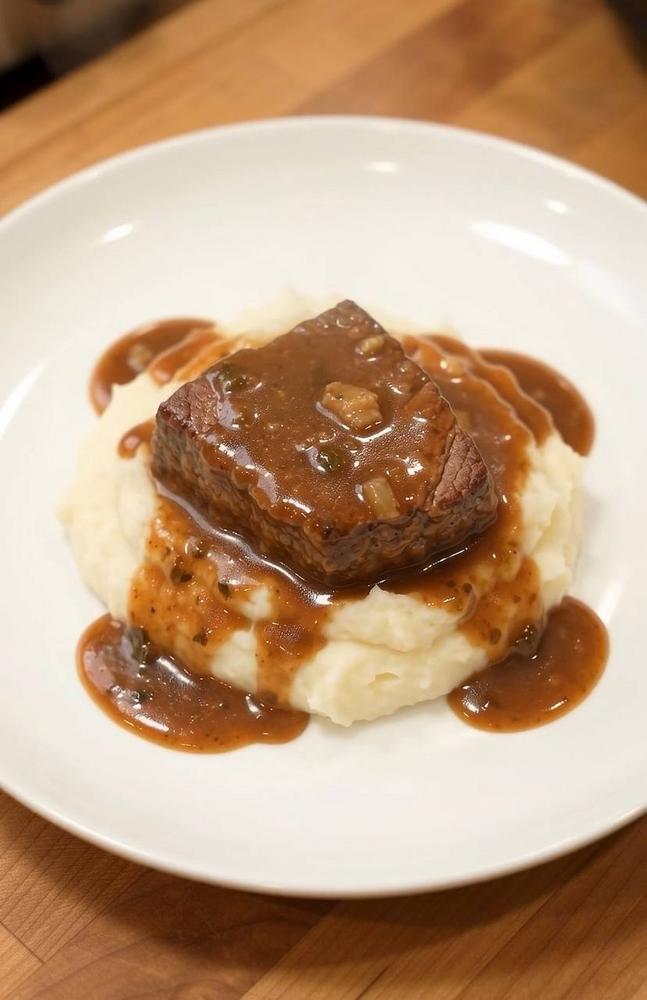
- Serve immediately by spooning a generous portion of creamy mashed potatoes onto each plate. Top with the tender beef tips and plenty of rich gravy.
- Garnish with fresh chopped parsley, if desired.
Cooking Tips and Variations
Achieving truly tender beef tips starts with the right cut of meat. While sirloin tips are excellent, don’t shy away from chuck roast or even bottom round, cut into 1 to 1.5-inch cubes. These cuts, with their good marbling and connective tissue, break down beautifully during slow cooking, yielding incredibly tender results. Always pat your beef dry before searing; moisture on the surface will steam the meat instead of browning it, preventing that crucial flavor development. Sear in batches to avoid overcrowding the pan, which lowers the temperature and inhibits browning.
For the mashed potatoes, using starchy potatoes like Russets or Yukon Golds is key to achieving that creamy, fluffy texture. Avoid waxy potatoes, as they tend to become gluey when mashed. After boiling, make sure to drain the potatoes thoroughly and return them to the hot pot over low heat for a minute or two. This “dries out” the potatoes, allowing them to absorb the butter and milk better, resulting in a lighter, fluffier mash. Always warm your milk or cream and melt your butter before adding them; cold dairy can cool down the potatoes and make them harder to mash smoothly. For an extra luxurious mash, consider using heavy cream or a blend of cream cheese and sour cream.
The gravy is the unsung hero of this dish. Its depth of flavor comes from the browned bits left in the pan after searing the beef – these are called “fond” and are packed with flavor. Deglazing with red wine or even just a splash of beef broth helps release these bits, which then become the foundation of your rich gravy. Don’t skip straining the braising liquid; this ensures a smooth, lump-free gravy. If you prefer a gluten-free gravy, you can thicken it with a cornstarch slurry (1 tablespoon cornstarch mixed with 2 tablespoons cold water) instead of a flour roux. Just whisk it into the simmering liquid until thickened.
To vary this dish, consider adding vegetables to the braising liquid along with the beef. Carrots, celery, sliced mushrooms, and pearl onions can be added during the last 30-45 minutes of cooking for extra flavor and nutrients. For a touch of acidity and brightness, stir in a splash of balsamic vinegar or a squeeze of lemon juice at the very end of the gravy cooking. You can also experiment with different herbs; fresh rosemary or bay leaves can be added to the braising liquid for an aromatic twist. Serving suggestions include a side of steamed green beans, roasted asparagus, or a crusty baguette to soak up every last drop of that incredible gravy.
Storage and Reheating
This dish makes for fantastic leftovers, as the flavors often deepen overnight. To store, allow the beef tips and gravy to cool completely before transferring them to an airtight container. The mashed potatoes should also be stored in a separate airtight container. Both components can be refrigerated for up to 3-4 days.
For longer storage, the beef tips and gravy freeze exceptionally well. Place them in a freezer-safe container or heavy-duty freezer bag, ensuring there’s minimal air. They can be frozen for up to 3 months. Mashed potatoes can also be frozen, though their texture may change slightly upon thawing. It’s best to freeze them in individual portions for easier reheating.
To reheat the beef tips and gravy, transfer them to a saucepan and gently warm over low to medium heat, stirring occasionally, until heated through. If the gravy has thickened too much, you can add a splash of beef broth or water to reach your desired consistency. If reheating from frozen, thaw overnight in the refrigerator first, then reheat as described. Alternatively, you can reheat in the microwave in a microwave-safe dish, stirring every minute or so, until hot.
Reheating mashed potatoes requires a bit more care to maintain their creamy texture. For best results, reheat them gently in a saucepan over low heat, adding a splash of milk or cream and a pat of butter, stirring frequently until smooth and hot. You can also reheat them in the microwave, stirring every 30-60 seconds, or in a baking dish covered with foil in a preheated oven at 300°F (150°C) until warmed through, adding a little liquid if they seem dry.
Frequently Asked Questions
Can I make this dish in a slow cooker?
Absolutely! After searing the beef and sautéing the onions and garlic as instructed, transfer them to your slow cooker. Add all the remaining beef tip ingredients (beef broth, wine, Worcestershire, herbs). Cook on low for 6-8 hours or on high for 3-4 hours, until the beef is fall-apart tender. Once the beef is cooked, remove it and proceed with straining the liquid to make the gravy on the stovetop as described, then return the beef to the gravy.
How can I make the gravy thicker or thinner?
If your gravy is too thin, you have a few options. You can simmer it longer to reduce and concentrate the flavors and thickness. Alternatively, create a cornstarch slurry by mixing 1 tablespoon of cornstarch with 2 tablespoons of cold water until smooth, then whisk it gradually into the simmering gravy until it reaches your desired consistency. If the gravy is too thick, simply whisk in a little more beef broth or water, a tablespoon at a time, until it thins out to your liking.
What if my mashed potatoes are lumpy?
Lumpy mashed potatoes often happen when the potatoes aren’t cooked long enough, or if they are overmixed. Ensure your potatoes are fork-tender before mashing. If you still end up with lumps, you can pass the mashed potatoes through a potato ricer or food mill for an exceptionally smooth texture. Avoid using a food processor, as it can overwork the starch and make the potatoes gluey.
Can I prepare parts of this meal ahead of time?
Yes, this is a great make-ahead meal! The beef tips and gravy can be fully prepared 1-2 days in advance and stored in the refrigerator. In fact, the flavors often improve overnight. Simply reheat gently on the stovetop when ready to serve. The mashed potatoes are best made fresh, but you can peel and quarter the potatoes and store them submerged in cold water in the refrigerator for up to a day before cooking. This helps save time on the day of serving.