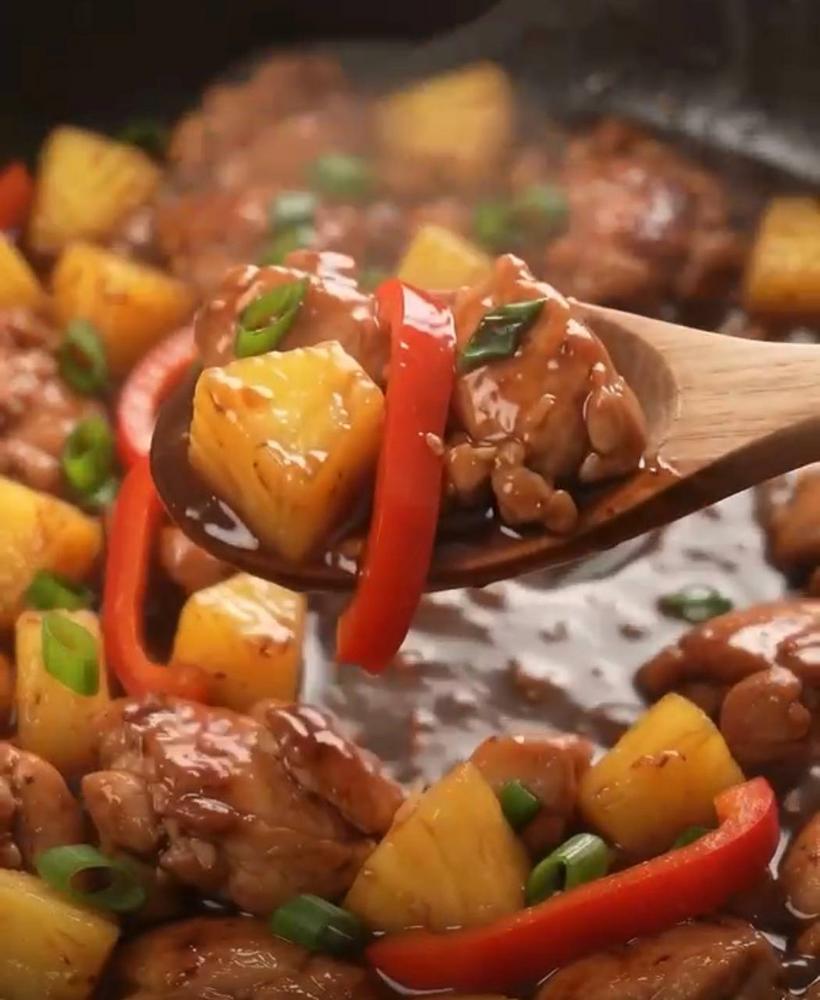
Instructions
- Prepare the Chicken and Vegetables: Pat the chicken pieces dry with paper towels. This helps them brown better. Cut the red bell pepper into 1-inch pieces and ensure your pineapple is cut into similar-sized chunks. Slice the green onions for garnish and set aside.
- Make the Teriyaki Sauce: In a medium bowl, whisk together the soy sauce, mirin, rice vinegar, brown sugar, grated ginger, and minced garlic until the sugar is dissolved. In a separate small bowl, whisk together the cornstarch and cold water to create a slurry. Set both aside.
- Sear the Chicken: Heat the olive oil in a large skillet (cast iron or non-stick recommended) over medium-high heat. Once hot, add the chicken pieces in a single layer, being careful not to overcrowd the pan. You may need to work in batches. Sear for 3-4 minutes per side, until golden brown and cooked through. Remove the cooked chicken from the skillet and set aside on a plate.
- Sauté the Bell Pepper: Add the red bell pepper pieces to the same skillet (add a tiny bit more oil if needed). Sauté for 3-5 minutes, stirring occasionally, until the bell pepper is slightly tender-crisp but still has a good bite.
- Combine and Simmer: Return the seared chicken to the skillet with the bell peppers. Pour the prepared teriyaki sauce mixture over the chicken and vegetables. Bring the sauce to a gentle simmer, stirring frequently.
- Thicken the Sauce: Once the sauce is simmering, give the cornstarch slurry a quick re-whisk and slowly pour it into the simmering sauce, stirring constantly. Continue to simmer and stir for 1-2 minutes, or until the sauce has thickened to a glossy, desirable consistency that coats the back of a spoon.
- Add Pineapple and Finish: Remove the skillet from the heat. Stir in the fresh pineapple chunks. If using, drizzle with sesame oil and stir to combine.
- Serve: Transfer the Teriyaki Chicken with Pineapple to serving bowls. Garnish generously with sliced green onions and a sprinkle of sesame seeds, if desired. Serve immediately over steamed white rice, brown rice, or noodles.
Cooking Tips and Variations
For the most tender and flavorful chicken, consider marinating your chicken pieces in a portion of the teriyaki sauce (about 1/4 cup) for at least 30 minutes, or up to 4 hours in the refrigerator, before searing. This allows the flavors to deeply penetrate the meat. When searing, avoid overcrowding the pan; this is crucial for getting a nice golden-brown crust on the chicken. If you add too much chicken at once, the temperature of the pan will drop, and the chicken will steam instead of sear, resulting in a less flavorful and appealing texture.
The beauty of homemade teriyaki is its customizability. If you prefer a sweeter sauce, add an extra teaspoon or two of brown sugar. For a spicier kick, a pinch of red pepper flakes or a dash of sriracha can be added to the sauce mixture. A squeeze of fresh lime juice at the end can also brighten up the flavors. To ensure your sauce thickens perfectly without lumps, always mix your cornstarch with cold water before adding it to the hot sauce. This creates a slurry that disperses evenly. Simmer the sauce gently; vigorous boiling can sometimes break down the cornstarch and thin the sauce. If you find your sauce isn’t thickening enough, you can make a small additional cornstarch slurry (1 teaspoon cornstarch with 1 tablespoon cold water) and slowly whisk it in until desired consistency is reached.
While this recipe features bell peppers and pineapple, feel free to experiment with other vegetables. Broccoli florets, snap peas, sliced carrots, mushrooms, or even zucchini would all be delicious additions. For a different protein, shrimp or firm tofu can be substituted for the chicken. Adjust cooking times accordingly; shrimp cooks very quickly, and tofu will need to be pressed and pan-fried until golden before adding to the sauce. To make this dish gluten-free, simply use Tamari instead of regular soy sauce. For a lower sodium option, choose low-sodium soy sauce and adjust to your taste. Serving suggestions abound: steamed jasmine rice is a classic, but it’s also fantastic over brown rice, quinoa, or even a bed of stir-fried noodles. A side of steamed edamame or a simple cucumber salad would complete the meal beautifully.
Storage and Reheating
To store any leftover Teriyaki Chicken with Pineapple, allow the dish to cool completely to room temperature first. Then, transfer it to an airtight container. It can be safely stored in the refrigerator for up to 3-4 days. For longer storage, you can freeze it for up to 2-3 months. If freezing, it’s best to separate the chicken and sauce from any rice or noodles you might have served it with, as rice can change texture when frozen and reheated.
When reheating, if the dish was refrigerated, you can gently warm it in a skillet over medium-low heat on the stovetop, stirring occasionally, until heated through. You may want to add a splash of water or chicken broth to loosen the sauce if it has thickened too much in the fridge. Alternatively, you can reheat individual portions in the microwave. Place the chicken and vegetables in a microwave-safe dish, cover loosely, and heat in 1-minute intervals, stirring between each, until piping hot. If reheating from frozen, it’s best to thaw it in the refrigerator overnight before reheating on the stovetop or in the microwave for the best results. Be sure to heat until the internal temperature reaches 165°F (74°C) to ensure it is safe to eat.
Frequently Asked Questions
Can I use canned pineapple instead of fresh?
Yes, you can use canned pineapple chunks if fresh is not available. However, be sure to drain them very well before adding them to the dish, as canned pineapple can be packed in sugary syrup which might make your sauce too sweet or thin. Fresh pineapple tends to hold its shape and texture better, providing a more vibrant flavor.
What can I substitute for mirin if I don’t have it?
Mirin is a sweet rice wine that adds a unique depth and sweetness to teriyaki sauce. If you don’t have mirin, you can substitute it with dry sherry or white wine mixed with a pinch of sugar (about 1/2 teaspoon sugar per tablespoon of wine). For a non-alcoholic option, apple juice or white grape juice can be used, though the flavor profile will be slightly different.
How can I make this dish spicier?
To add a kick to your teriyaki chicken, you have several options. You can add 1/2 teaspoon of red pepper flakes to the sauce mixture along with the other ingredients. Alternatively, a teaspoon of sriracha or a dash of your favorite chili garlic sauce can be stirred into the sauce at the end of cooking, or served on the side for individual customization.