Instructions
- Prepare Your Workspace: Line a large baking sheet with parchment paper or a silicone baking mat. This will prevent the clusters from sticking and make for easy cleanup.
- Melt the Chocolate (Microwave Method): Place the chocolate chips or melting wafers and the butter or coconut oil (if using) in a large, microwave-safe bowl. Microwave on high for 30-second intervals, stirring thoroughly after each interval, until the chocolate is mostly melted and smooth. Be careful not to overheat the chocolate, as it can seize or burn. It’s better to stir a bit longer to melt any remaining small lumps with the residual heat.
- Melt the Chocolate (Double Boiler Method): Alternatively, you can use a double boiler. Fill a saucepan with about an inch or two of water and bring it to a simmer. Place a heatproof bowl (make sure it fits snugly over the saucepan without touching the water) with the chocolate chips and butter or coconut oil over the simmering water. Stir constantly until the chocolate is completely melted and smooth. Remove the bowl from the heat once melted.
- Add Vanilla (Optional): If using, stir in the vanilla extract into the melted chocolate until well combined.
- Combine with Peanuts: Add the dry roasted, salted peanuts to the melted chocolate. Using a sturdy spatula, gently fold and stir the peanuts until they are completely coated in chocolate. Ensure no dry spots remain.
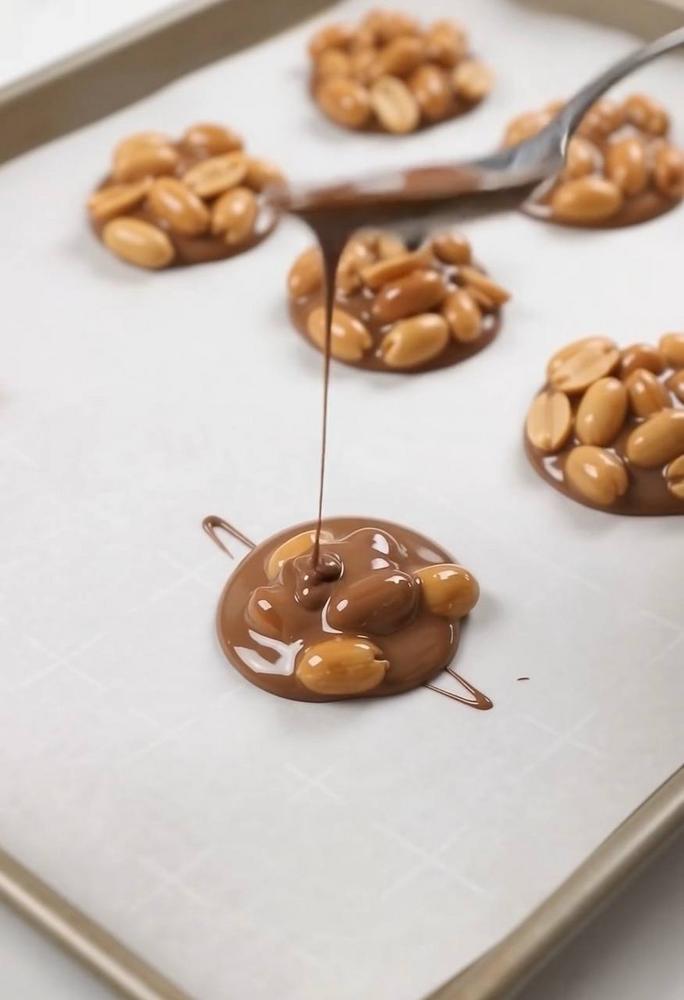
- Form the Clusters: Using two spoons or a small cookie scoop (about 1-tablespoon size), drop spoonfuls of the chocolate-peanut mixture onto the prepared baking sheet. Leave a little space between each cluster. You can shape them slightly with the back of a spoon if you desire a more uniform look, but their rustic appearance is part of their charm.
- Garnish (Optional): If you like, sprinkle a tiny pinch of flaky sea salt over the top of each cluster while the chocolate is still wet. This enhances the sweet and salty flavor profile beautifully.
- Set the Clusters: Place the baking sheet in the refrigerator for 30-60 minutes, or until the chocolate is completely firm and set. If your kitchen is cool, you can also let them set at room temperature for 1-2 hours, but refrigeration speeds up the process and results in a firmer cluster.
- Enjoy!: Once fully set, carefully peel the chocolate peanut clusters off the parchment paper. They are now ready to be devoured!
Cooking Tips and Variations
Achieving perfect chocolate peanut clusters is simple, but a few tips can elevate your results. Firstly, always use good quality chocolate. Chocolate chips designed for melting or baking bars will give you the best texture and flavor. Avoid using chocolate bars meant for eating, as they often contain less cocoa butter and can seize or be difficult to melt smoothly. When melting, patience is key. Overheating chocolate is the most common mistake; it can cause it to become grainy, thick, or “seize.” If using the microwave, stir diligently after each short interval, even if it doesn’t look fully melted, as residual heat will continue the process. For a truly smooth melt, the double boiler method is almost foolproof as it provides gentle, indirect heat.
To prevent your clusters from becoming too soft or sticky, ensure they are fully set before handling. Refrigeration is the quickest way to achieve this, especially in warmer climates. If you find your chocolate has seized (become thick and clumpy), you can sometimes rescue it by stirring in a teaspoon of vegetable oil or melted coconut oil, one at a time, until it smooths out. However, prevention is better than cure, so avoid getting any water into your melting chocolate.
The beauty of chocolate peanut clusters lies in their adaptability! You can easily customize them to suit your preferences or what you have on hand. For different chocolate experiences, try using dark chocolate for a more intense, less sweet flavor, or white chocolate for a creamy, vanilla-forward treat. A blend of milk and dark chocolate can also create a wonderfully balanced profile. Don’t limit yourself to just peanuts; other nuts like roasted almonds, cashews, pecans, or a mixed nut blend work beautifully. For an extra layer of texture and flavor, consider adding mix-ins like mini marshmallows, crushed pretzels for a salty crunch, dried cranberries or raisins for a touch of chewiness and tartness, or even toffee bits for a buttery caramel note. For a decorative finish, a drizzle of contrasting melted chocolate (e.g., white chocolate over dark chocolate clusters) or a sprinkle of colorful sprinkles can make them even more appealing, especially for holidays or parties. Flaky sea salt is always a winner, enhancing the sweet and savory contrast with minimal effort.
Storage and Reheating
Storing your homemade chocolate peanut clusters properly will ensure they maintain their delicious taste and texture for as long as possible. Once the clusters are completely set and firm, transfer them to an airtight container. You can layer them between sheets of parchment paper to prevent them from sticking together, especially if they are slightly soft or if your container is crowded. For optimal freshness and to prevent the chocolate from blooming (developing a white, streaky film due to temperature fluctuations), store them in a cool, dry place at room temperature, away from direct sunlight or heat sources. In most environments, they will keep well for up to two weeks at room temperature.
If your kitchen is particularly warm or humid, or if you prefer a firmer cluster, you can store them in the refrigerator. When stored in the fridge, they can last for up to three to four weeks. However, keep in mind that refrigeration can sometimes dull the flavor of chocolate slightly, and the cold can make the clusters very hard. If you store them in the refrigerator, it’s often best to let them sit at room temperature for 5-10 minutes before serving, allowing the chocolate to soften just slightly and for the flavors to become more pronounced.
Chocolate peanut clusters do not require reheating. They are best enjoyed at room temperature or slightly chilled. Reheating them would cause the chocolate to melt, which would ruin their cluster form. If they have been stored in the refrigerator and are too hard, simply letting them sit out for a few minutes will bring them back to their ideal texture for eating.
Frequently Asked Questions
Can I use raw peanuts for this recipe?
While you technically could, it’s highly recommended to use dry roasted, salted peanuts. Raw peanuts would need to be roasted first to develop their flavor and crunch. Using them raw would result in a less flavorful and less satisfying texture in your clusters. The salt on roasted peanuts also provides a crucial flavor contrast to the sweet chocolate.
Why did my chocolate seize or become grainy when melting?
Chocolate seizing usually happens for two main reasons: either a tiny bit of water got into the chocolate while melting (even a single drop can cause it), or the chocolate was overheated. When melting, ensure all your utensils and bowls are completely dry. If using a double boiler, make sure the bottom of your chocolate bowl doesn’t touch the simmering water, and no steam escapes into the chocolate. If microwaving, use short intervals and stir constantly to prevent overheating.
How can I make these clusters healthier?
While these are a treat, you can make some adjustments. Use dark chocolate with a higher cocoa percentage (70% or more) as it contains less sugar and more antioxidants. You can also use unsalted peanuts if you’re watching sodium, or a mix of nuts like almonds or walnuts for different nutritional profiles. However, remember they are still a caloric treat, so moderation is key.
Can I freeze chocolate peanut clusters?
Yes, you can! Freezing chocolate peanut clusters is a great way to extend their shelf life. Place the set clusters in an airtight freezer-safe container, separating layers with parchment paper. They can be stored in the freezer for up to 2-3 months. When you’re ready to enjoy them, simply remove them from the freezer and let them thaw at room temperature for about 15-20 minutes before serving.