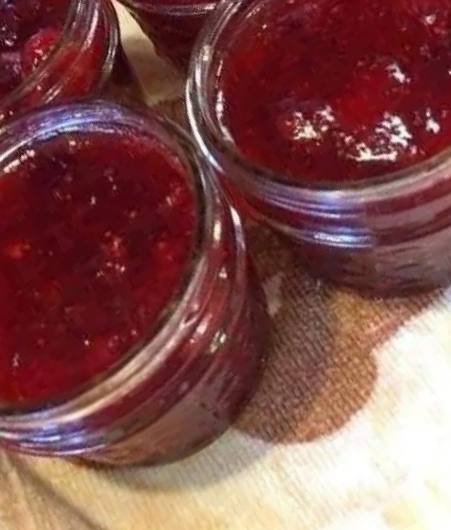
Instructions
- Begin by sterilizing your canning jars and lids. Wash jars and lids in hot, soapy water. Rinse well. Place jars upright on a rack in a large canning pot or stockpot. Fill jars and pot with water to cover jars by at least 1 inch. Bring to a rolling boil and boil for 10 minutes (adjust for altitude if necessary). Keep jars in hot water until ready to fill. Place lids in a small saucepan with simmering water, keeping them hot but not boiling.
- In a large, heavy-bottomed pot or Dutch oven, combine the cranberries, raspberries, and diced apple. Add the orange juice and lemon juice.
- Bring the fruit mixture to a simmer over medium heat, stirring occasionally, until the fruit begins to soften and break down, about 10-15 minutes. Use a potato masher or the back of a spoon to gently crush the fruit to your desired consistency. For a smoother jam, you can use an immersion blender for a few pulses, but leave some chunks for texture.
- Stir in the granulated sugar, ground cinnamon, ground nutmeg, ground cloves, ground ginger, and a pinch of salt. Mix well until the sugar is completely dissolved.
- Increase the heat to medium-high and bring the mixture to a rolling boil that cannot be stirred down. Continue to boil, stirring frequently to prevent scorching, for 15-25 minutes, or until the jam reaches its setting point.
- To test for set, place a small plate in the freezer before you start cooking. Once the jam has been boiling for a while, spoon a small amount onto the chilled plate. Return the plate to the freezer for 1-2 minutes. Remove the plate and push the jam with your finger; if it wrinkles, it has reached the setting point. If it’s still too runny, continue to boil for a few more minutes and retest.
- Once the jam has reached the setting point, carefully remove the pot from the heat.
- Remove one sterilized jar from the hot water, pouring the water back into the pot. Place the hot jar on a heat-proof surface. Using a ladle and a canning funnel, carefully fill the hot jar with the hot jam, leaving 1/4 inch of headspace from the rim.
- Wipe the rim of the jar clean with a damp paper towel to ensure a good seal. Place a hot lid on the jar, then screw on a band until fingertip tight (just snug, not overly tight).
- Repeat with the remaining jam and jars.
- Carefully place the filled jars back into the canning pot, ensuring they are covered by at least 1 inch of hot water. Bring the water back to a rolling boil and process the jars for 10 minutes (adjust for altitude if necessary).
- After 10 minutes, turn off the heat and carefully remove the jars from the pot using canning tongs. Place them upright on a towel-lined counter or wire rack, ensuring they are not touching each other.
- Allow the jars to cool undisturbed for 12-24 hours. As they cool, you should hear a “ping” sound as the lids seal.
- After cooling, check the seals by pressing down on the center of each lid. If the lid does not flex, it is sealed. If a lid has not sealed, refrigerate that jar of jam and consume it within 3 weeks.
- Wipe sealed jars clean, label them with the date, and store in a cool, dark place.
Cooking Tips and Variations
For the best results with your Christmas Jam, always use fresh, ripe fruit when available. If using frozen fruit, there’s no need to thaw it beforehand; simply add it to the pot directly from the freezer. The apple in this recipe serves not just for flavor, but also as a natural source of pectin, helping the jam to set. If your fruit is particularly low in pectin or you prefer a firmer set, you can add 1-2 tablespoons of powdered pectin according to package directions, typically mixed with a small amount of sugar before adding to the fruit. Always ensure your sugar is fully dissolved before bringing the jam to a rapid boil, as undissolved sugar can lead to a grainy texture.
When it comes to the spices, feel free to adjust them to your personal preference. A touch of orange zest added with the fruit can deepen the citrus notes, or you could experiment with a tiny pinch of cardamom for an exotic twist. For a spicier jam, increase the cinnamon or ginger. If you enjoy a hint of warmth, a tablespoon of brandy or rum can be stirred in right after the jam is removed from the heat, before jarring. Remember, the key to good jam is patience and frequent stirring, especially as it thickens, to prevent scorching at the bottom of the pot. Always use a heavy-bottomed pot to distribute heat more evenly.
For variations, consider adding other festive fruits. A half cup of dried cranberries or cherries, rehydrated in a little orange juice, can be a lovely addition. You could also swap out a portion of the raspberries for blackberries or even finely chopped plums for a darker, richer jam. If serving this jam with cheese, a sprinkle of fresh rosemary or thyme added during the last few minutes of cooking can provide an unexpected savory note. For a beautiful gift presentation, tie a festive ribbon around the jar, add a handmade label, or cover the lid with a circle of holiday-themed fabric.
Storage and Reheating
Properly canned Christmas Jam, stored in a cool, dark place like a pantry or cupboard, will maintain its quality and flavor for up to 1 year. Once a jar has been opened, it must be refrigerated and consumed within 2-3 weeks. Unsealed jars of jam should also be stored in the refrigerator and eaten within the same timeframe. Freezing is another option for unsealed or excess jam; simply transfer it to freezer-safe containers, leaving about an inch of headspace, and freeze for up to 6 months. Thaw frozen jam in the refrigerator before use.
This jam does not typically require reheating, as it is usually served at room temperature or chilled. However, if you wanted to serve it warm, perhaps over ice cream or as a glaze for ham, you can gently warm a small amount in a saucepan over low heat, stirring constantly, until it reaches your desired temperature. Be careful not to boil it again, as this can alter its texture. For a quick warm-up, a small portion can also be microwaved in 15-second intervals, stirring in between, until warm.
Frequently Asked Questions
What is the best way to test if my jam has set properly?
The most reliable method is the chilled plate test. Place a ceramic plate in the freezer for 10-15 minutes before you start cooking. When you think the jam is ready, spoon a small amount (about a teaspoon) onto the cold plate. Return the plate to the freezer for 1-2 minutes. Then, gently push the jam with your fingertip. If the surface wrinkles and the jam holds its shape, it has reached the setting point. If it’s still runny, continue to cook for a few more minutes and retest.
Can I reduce the amount of sugar in this recipe?
While it might be tempting to reduce sugar for health reasons, sugar plays a crucial role in jam making beyond just sweetness. It acts as a preservative and contributes to the jam’s texture and ability to set. Significantly reducing the sugar content can result in a jam that doesn’t set properly, has a shorter shelf life, and may be prone to spoilage. If you wish to make a lower-sugar jam, it’s best to use a specialized low-sugar pectin and follow its specific instructions, as the fruit-to-sugar ratio will be different.
My jam didn’t seal after canning. What went wrong?
Several factors can prevent a proper seal. The most common reasons include not leaving enough headspace (1/4 inch is crucial), not wiping the jar rims clean before applying lids (food particles can interfere with the seal), overtightening the bands (which can prevent air from escaping), or issues with the processing time or temperature. If a jar doesn’t seal, simply refrigerate it and consume its contents within 2-3 weeks. You can also reprocess the jam within 24 hours by reheating it, placing it in a clean, new hot jar with a new lid, and processing it again according to the instructions.
What are some creative ways to use Christmas Jam besides on toast?
Christmas Jam is incredibly versatile! Beyond toast and scones, try swirling it into plain yogurt or oatmeal for a festive breakfast. It makes an excellent filling for thumbprint cookies, tarts, or crepes. Pair it with a holiday cheese board, especially with brie, goat cheese, or sharp cheddar. You can also use it as a glaze for roasted meats like pork loin or ham, or mix it into vinaigrettes for a bright salad dressing. For a delicious dessert, warm it slightly and serve over vanilla ice cream or pound cake.