Instructions
- Set your Instant Pot to the “Sauté” function on “Normal” heat. Add the olive oil. Once hot, add the sliced Andouille sausage and cook, stirring occasionally, until browned and slightly crispy, about 5-7 minutes. Remove the sausage with a slotted spoon and set aside, leaving any rendered fat in the pot.
- Add the ground pork or beef to the pot. Break it up with a spoon and cook until fully browned, about 8-10 minutes. Drain any excess grease, then remove the ground meat with a slotted spoon and set aside with the sausage.
- Add the diced onion, green bell pepper, red bell pepper, and celery to the pot. Sauté, stirring occasionally, for 5-7 minutes, until the vegetables begin to soften.
- Stir in the minced garlic, diced tomatoes (undrained), tomato paste, dried oregano, dried thyme, smoked paprika, cayenne pepper, and Cajun/Creole seasoning. Cook for 2-3 minutes, stirring constantly, allowing the spices to become fragrant and the tomato paste to deepen in color.
- Pour in the chicken broth and water. Use a wooden spoon to scrape up any browned bits from the bottom of the pot. This is crucial for preventing a “Burn” notice. Ensure the bottom is completely clear.
- Add the rinsed long-grain white rice to the pot. Gently spread it into an even layer, but do not stir it into the liquid. You want the rice to sit on top of the liquid as much as possible.
- Return the browned sausage and ground meat to the Instant Pot, distributing them evenly over the rice. Again, do not stir.
- Secure the lid on the Instant Pot and make sure the venting knob is set to the “Sealing” position. Select the “Pressure Cook” or “Manual” function on “High” pressure for 8 minutes.
- Once the cooking cycle is complete, allow for a 10-minute Natural Pressure Release (NPR). After 10 minutes, carefully switch the venting knob to the “Venting” position to quick release any remaining pressure. Once the pin drops, you can safely open the lid.
- Stir the Jambalaya gently to combine all the ingredients. Taste and adjust seasonings if necessary, adding more salt, pepper, or cayenne if desired.
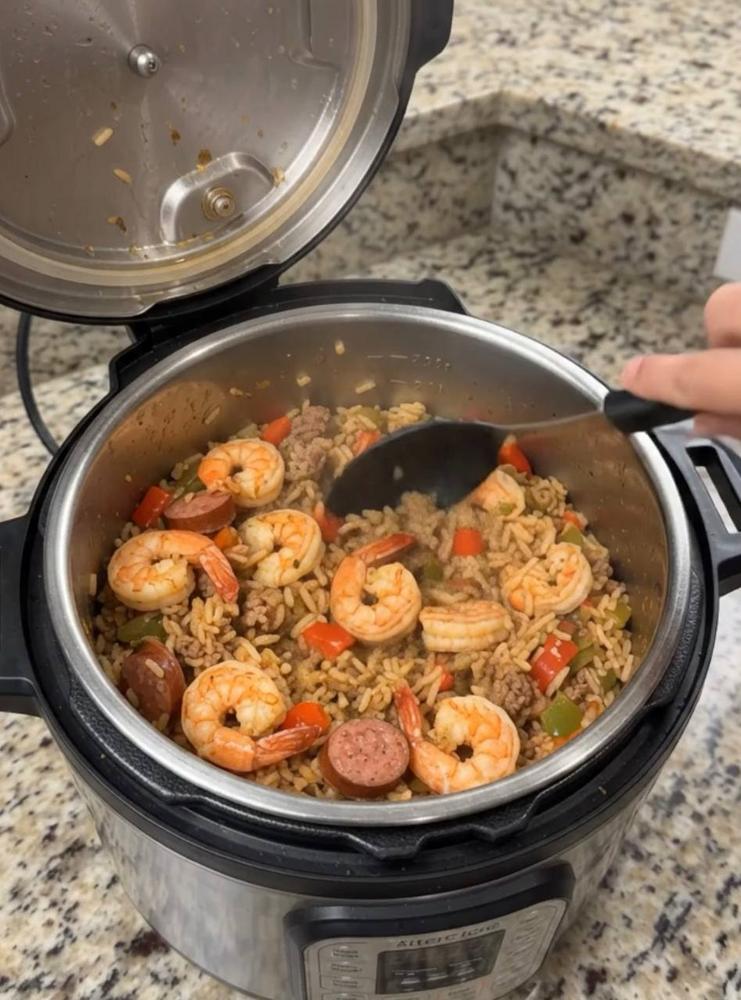
- Add the peeled and deveined shrimp to the hot Jambalaya. Stir them in gently. Place the lid back on the Instant Pot (no need to seal or set a program) and let it sit for 5-7 minutes, allowing the residual heat to cook the shrimp until they are pink and opaque. Do not overcook the shrimp.
- Fluff the Jambalaya with a fork. Garnish with fresh chopped parsley and sliced green onions. Serve immediately with hot sauce on the side, if desired.
Cooking Tips and Variations
For the ultimate “easy” experience, ensure your vegetables are pre-chopped or use a food processor for quick dicing. The Instant Pot truly shines when the prep work is streamlined. Don’t skip the crucial step of deglazing after browning your meats. Those browned bits stuck to the bottom of the pot are packed with flavor, and scraping them up with a wooden spoon while adding liquid prevents the dreaded “Burn” notice. When adding the rice and meats, resist the urge to stir everything together before pressure cooking. Layering the ingredients, with the liquid at the bottom and the rice and meats on top, helps prevent sticking and ensures even cooking.
Achieving the perfect rice texture is key to a great Jambalaya. Using long-grain white rice is recommended as it holds its shape well and absorbs flavors beautifully. Rinsing the rice thoroughly before adding it to the pot helps remove excess starch, preventing a gummy texture. The 10-minute Natural Pressure Release (NPR) is also vital; it allows the pressure to drop slowly, letting the rice continue to steam and absorb moisture, resulting in fluffy, distinct grains. If you find your rice is a bit too wet, simply let the Jambalaya sit uncovered for a few minutes after adding the shrimp, allowing some of the steam to escape.
Jambalaya is wonderfully adaptable. For protein variations, you can use chicken thighs (cut into 1-inch pieces) instead of ground meat, or a mix of all three. If you prefer a vegetarian version, omit the meats and double up on vegetables like zucchini, corn, and kidney beans, adjusting the broth to a vegetable base. For an extra layer of smoky flavor, some recipes include a small amount of liquid smoke or smoked ham hocks. Adjusting the spice level is entirely up to your preference. Start with the recommended amount of cayenne pepper and Cajun/Creole seasoning, then taste and add more at the end if you crave more heat. A dash of your favorite hot sauce at the table is always a welcome addition for those who like it extra spicy. Remember that Cajun/Creole seasoning blends vary widely in salt content; if your blend is very salty, you might want to use low-sodium broth and taste before adding extra salt.
Storage and Reheating
Jambalaya is an excellent dish for meal prep and makes for delicious leftovers. To store, allow the Jambalaya to cool completely to room temperature (within two hours of cooking). Transfer it to an airtight container and refrigerate for up to 3-4 days. For longer storage, Jambalaya freezes beautifully. Place cooled portions into freezer-safe containers or heavy-duty freezer bags, removing as much air as possible. It can be frozen for up to 3 months. Thaw frozen Jambalaya overnight in the refrigerator before reheating.
When reheating, you have a few options to ensure your Jambalaya remains delicious. For individual servings, the microwave is your quickest friend. Place a portion in a microwave-safe dish, add a tablespoon or two of chicken broth or water to prevent drying out, cover loosely, and heat on high for 2-3 minutes, stirring halfway through, until heated through. For larger quantities, or if you prefer a stovetop method, transfer the Jambalaya to a large pot or skillet over medium-low heat. Add a splash of chicken broth or water to help rehydrate and prevent sticking. Stir occasionally until thoroughly heated. Avoid overheating, as this can dry out the rice and make the shrimp rubbery. The Instant Pot can also be used to reheat using the “Sauté” function on “Less” or “Keep Warm” settings, again with a little added liquid and frequent stirring.
Frequently Asked Questions
Why did my Instant Pot give me a “Burn” notice?
A “Burn” notice typically means there are food particles stuck to the bottom of the pot, or the liquid content isn’t sufficient. To prevent this, always thoroughly deglaze the pot after sautéing meats and vegetables by scraping up all browned bits with a wooden spoon when you add the liquid. Also, ensure you do not stir the rice into the liquid before pressure cooking; it should be layered on top.
Can I use brown rice instead of white rice?
While long-grain white rice is traditional and recommended for its texture in Jambalaya, you can use brown rice. However, brown rice requires a longer cooking time and more liquid. If substituting, you would likely need to increase the pressure cooking time to 20-22 minutes with a full Natural Pressure Release, and potentially add an extra 1/2 to 1 cup of broth. The texture will be different from traditional Jambalaya.
What’s the difference between Cajun and Creole Jambalaya?
The main difference lies in the use of tomatoes. Creole Jambalaya, often associated with New Orleans, typically includes tomatoes (earning it the nickname “red jambalaya”) and often has a wider variety of ingredients like seafood. Cajun Jambalaya, from rural Louisiana, usually omits tomatoes and has a browner appearance, focusing more on meats like pork and sausage. Our Instant Pot recipe leans towards a Creole-inspired flavor profile with the addition of diced tomatoes and tomato paste.
Can I make this ahead of time for a party?
Absolutely! Jambalaya is a fantastic make-ahead dish as the flavors often deepen overnight. You can prepare the entire dish, minus the shrimp, a day in advance. When ready to serve, gently reheat the Jambalaya on the stovetop or in the Instant Pot on “Sauté” (low setting) with a splash of broth. Add the fresh shrimp during the reheating process and cook until just opaque, or cook the shrimp separately and stir them in at the very end to ensure they don’t overcook.